





Hydraulic lime
Durability Guaranteed - Pulhamite Rockwork - Its conservation and repair, published by Historic England in 2008, defines hydraulic lime as: ‘A form of lime which will set and harden under water, primarily through chemical reaction with the water (in contrast to non-hydraulic limes, which harden by reaction with carbon dioxide in the air; see Non-hydraulic lime). Hydraulic limes contain varying amounts of calcium silicates, calcium aluminates and calcium hydroxide, produced either by the burning of clay-rich (argillaceous) limestones or by the addition of various hydraulic materials.’
Short Guide: Traditional Scottish Brickwork, published, on 1 March 2014 by Historic Environment Scotland, defines hydraulic limes as: ‘Limes which give a chemical set that is quicker and harder than the carbonation of pure limes.’
The Society for the Protection of Ancient Buildings (SPAB) in their online Glossary define hydraulic or water lime as: '(i) Natural hydraulic limes are prepared from limestone with reactive silica and alumina impurities. The lime reacts with the impurities in the presence of water to form calcium silicates and aluminates (cf non-hydraulic lime), in addition to the calcium carbonate that contributes to the hardening process when exposed to the air. They are classified under BS EN 459: Part 1: 2001 as NHL 2, 3.5 or 5, in order of increasing strength.
(ii) Natural hydraulic limes with an additive are classified as NHL-Z, while HL denotes an artificial hydraulic lime. Since manufacturers do not have to state whether the additives include Portland cement or what the percentages are, these products should be avoided in conservation work.'
See also: Non-hydraulic lime and Natural hydraulic lime.
[edit] Related articles on Designing Buildings
Featured articles
Check out some of the best features and news from Designing Buildings as well as key stories from around the web.
Bridging the gap between clients and contractors

Concerns remain around contractor quality, capability, and delivery.
Construction Management, 10 June.
Heat pumps beat boilers in new home tests.
Building Safety Act implementation in Wales

CIAT to host industry panel on 26 June.

New and updated CLC building safety guidance.
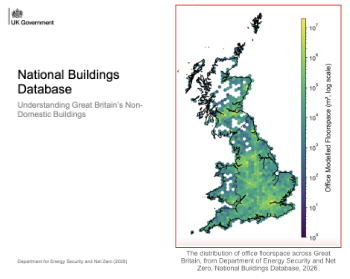
New UK National Buildings Database.
Building Safety Wiki Interviews

Chief executive of the British Woodworking Federation.
Planning condition discharge in England and Wales

A brief explanation from a building compliance expert, with further links.
Overheating guidance and tools for building designers

Guidance for dealing with element of building fabric control that have increasing importance.
Shading for housing, a design guide

From the Good Homes Alliance and British Blind and Shutter Association.
UK Standard Skills Classification (SSC)

A shared framework for describing skills needs.
Social media ban consultation comes to close

CIOB urges UK Government to consider social media’s role in careers guidance in ban debate.