





England's Suburbs 1820-2020

England's Suburbs 1820-2020, Joanna Smith and Matthew Whitfield, Liverpool University Press on behalf of Historic England, 2025, 308 pages, fully illustrated, hardback.
Most people in England live in suburbs. The authors of this book note that it has been argued that England could be viewed as ‘the suburban nation’. But what is a suburb? You do not often hear developers or housebuilders boasting that their new scheme is ‘suburban’, and the first definition I find when looking up ‘suburban’ online is ‘contemptibly dull and ordinary’. So it seems that most people have ended up living somewhere that is not the sort of place they like. What is going on?
The answer is that creating suburbs is a common feature of urban change. Joanna Smith and Matthew Whitfield nail it with the three-part ‘broad definition’ that they use in this book. The features of a suburb are, they write, ‘a peripheral or satellite location at the time of creation; a degree of dependence on an urban centre; and a mainly, but not necessarily exclusively, residential character.’
Those three features are all subject to change. A development may have a peripheral or satellite location when it is built, but subsequent development may surround it. The suburb may have a degree of dependence on an urban centre at first, but in time it may develop facilities of its own that make it more independent. And although it may have a mainly residential character when it is built, later it may be swallowed by a town or city centre and undergo a significant change of character.
The new suburban development may itself swallow what was there before. In the 19th century, Smith and Whitfield write, ‘rubbish heaps, made up of a medley of refuse, including household waste, street sweepings and dead animals, were to be found in the suburban outskirts and in the poorer urban districts; in London these sometimes attained great size and notoriety.’ Rising land values might lead to those eyesores being removed.
Today, the outskirts of towns and cities may be home to ‘waste disposal sites, water reservoirs, industrial plant, power generation sites, pylons and transport infrastructure, including airports and motorway interchanges, supplemented by retail parks, leisure complexes, business parks and distribution depots.’ The advancing suburbs may incorporate those uses or replace them, depending on the economics of development. And suburbs may be seen as suitable for intensification, with a resulting increase in density and perhaps diversity of uses.
So suburbs are often changing, not static, however superficially similar many of them may appear. To plan, manage and protect them effectively we need to understand how they developed and what role they play today. That is why in 2012 English Heritage, now Historic England, initiated a national research project on suburban development that would put it in context, and why Historic England has drawn on that research in publishing this book.
England's Suburbs 1820-2020, meticulously researched, well written and superbly illustrated, will be of enormous value to anyone dealing with historic and not-so-historic buildings in what are or once were suburbs, or to anyone fascinated by urban history.
This article originally appeared as ‘Suburban nation’ in the Institute of Historic Building Conservation’s (IHBC’s) Context 186, published in December 2025. It was written by Rob Cowan, editor of Context.
--Institute of Historic Building Conservation
Related articles on Designing Buildings Conservation.
- Conservation area.
- Conservation.
- Exurb.
- Garden cities.
- Garden town.
- Green belt.
- Heritage.
- Historic environment.
- IHBC articles.
- IHBC.
- Redefining density, making the best use of London’s land to build more and better homes.
- Suburb.
- Suburbanisation.
- The compact sustainable city.
- Town.
- Types of place.
- Urban sprawl.
IHBC NewsBlog
IHBC sponsors Gardens Trust event 23-4 Sept 2026
.jpeg)
'Learning from the Past, Shaping the Future’ takes place in Milton Keynes
Renovations to Frank Lloyd Wright's Fallingwater complete
.jpg)
World Heritage Preserved project opens house for tours again
Shakespeare Birthplace Trust places Hall's Croft on HAR Register
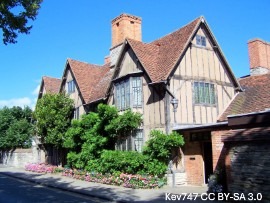
Stratford-upon-Avon home of Shakespeare's daughter is 'At Risk'
Lady Grange’s House repaired on St Kilda
.jpg)
National Trust for Scotland repairs stone cleit with link to famous island resident
Griff Rhys Jones on BBC Radio 4 Today programme
,_Green_Lane,_Derby.jpg)
The Victorian Society’s President unveiled its latest Top Ten Endangered Buildings 2026.
Need a MATE? Book your place now.

IHBC offers free webinars on applying for IHBC accreditation (Full & Associate).
UK Stained Glass Repository finds windows new homes

How are stained glass windows are rescued, stored and repurposed?
APPGEBE report sets high aims for quality
'Government must not sacrifice quality in drive to build 1.5m homes'
New measures protect Historic Shipwrecks from heritage crime

Underwater cultural heritage benefits from new HE guidance
How could the City of London skyline look in 6 years' time?

Visualisation shows approved planning applications as completed buildings
National Trust for Scotland calls for VAT cuts
Heritage neglect is encouraged by current policies
IHBC's 'Context' Issue 186 features Industrial Heritage

IHBC's members' journal reports on the challenges of conserving infrastructure
Book now for IHBC Annual School 2026

IHBC Annual School is taking place 18-20 June 2026 in Newcastle
RICHeS Research Infrastructure offers ‘Full Access Fund Call’

RICHeS offers a ‘Help’ webinar on 11 March
Latest IHBC Issue of Context features Roofing
Articles range from slate to pitched roofs, and carbon impact to solar generation to roofscapes
Three reasons not to demolish Edinburgh’s Argyle House

Should 'Edinburgh's ugliest building' be saved?
IHBC’s 2025 Parliamentary Briefing...from Crafts in Crisis to Rubbish Retrofit
IHBC launches research-led ‘5 Commitments to Help Heritage Skills in Conservation’
How RDSAP 10.2 impacts EPC assessments in traditional buildings

Energy performance certificates (EPCs) tell us how energy efficient our buildings are, but the way these certificates are generated has changed.