







Employment status: a concise guide

|
Recent court cases involving the likes of Uber, Deliveroo and Pimlico Plumbers mean that the topic of employment status is never far from the spotlight. This reflects the growing importance of new ways of working, such as in the so-called ‘gig economy’.
Keen to enlarge its revenue from income tax and national insurance contributions (NICs), the UK government has also been adopting a tougher line on employment status, ‘cracking down’ on various arrangements perceived to facilitate what is often termed ‘false self-employment’.
Organisations need to determine at the outset, ideally in writing, whether an individual is an employee, a worker or self-employed.
Contents |
[edit] Determining status
The three main factors (sometimes referred to as the ‘irreducible minimum’) that are normally considered by a court or an employment tribunal when determining an individual's employment status are as follows:
[edit] 1 Personal service
An employee/worker is required to provide their services personally. They cannot employ or engage staff to support themselves in doing so. In contrast, a self-employed person is not required to carry out the services personally and has an unfettered right to appoint substitutes or additional personnel.
[edit] 2 Mutuality of obligations
In an employment relationship, the employer is under an obligation to provide the employee with regular work, and the employee (quite often a worker, too) is under an obligation to do the work where provided. An organisation is not obliged to offer work to a self-employed person on a regular or frequent basis and that individual is not obliged to accept any work where offered.
[edit] 3 Control
An employee/worker is under the employer's control in terms of what they do, how they do it and when they do it, although professional or skilled individuals may exercise discretion over their own work and still be classed as employees. A self-employed individual is deemed to have the freedom to determine when and how they work and is not under the direct control or supervision of their client.
If all three of the above elements are present, the individual is likely to be an employee (or sometimes a ‘worker’). Tribunals normally look at the full picture, at the terms of the contract between the business and the individual, and how the arrangements operate in practice.
Other key indicators may be used to help determine whether an individual is employed or not. These can be found in the ECA’s Guidance Document on employment status (for ECA members only). Visit [[w/index.php?title=W/index.php%3Ftitle%3DW/index.php%3Ftitle%3DW/index.php%3Ftitle%3DW/index.php%3Ftitle%3DWww.eca.co.uk/business-industry-support/employee-relations%26action%3Dedit%26redlink%3D1%26action%3Dedit%26redlink%3D1%26action%3Dedit%26redlink%3D1%26action%3Dedit%26redlink%3D1&action=edit&redlink=1|www.eca.co.uk/business-industry-support/employee-relations]] for more.
[edit] About this article
This article was written by Orazio Amantia, Senior Employee Relations Advisor at the Electrical Contractors’ Association (ECA). It was first published on the ECA website in April 2019 and can be accessed here.
[edit] Related articles on Designing Buildings
- Equality Act.
- Equal opportunities policy.
- Gangmaster.
- Good Work Plan promises clearer contracts, fairer rules
- IR35.
- Non-productive overtime.
- PAYE.
- Payroll companies.
- Personal service company.
- Professional indemnity insurance.
- TUPE Regulations.
- Umbrella companies.
--ECA
Featured articles and news
Costs and insolvencies mount for SMEs, despite growth

Construction sector under insolvency and wage bill pressure in part linked to National Insurance, says report.
The place for vitrified clay pipes in modern infrastructure

Why vitrified clay pipes are reclaiming their role in built projects.

Research by construction PR consultancy LMC published.
Roles and responsibilities of domestic clients

ACA Safety in Construction guide for domestic clients.
Fire door compliance in UK commercial buildings

Architect and manufacturer gives their low down.
Plumbing and heating for sustainability in new properties

Technical Engineer runs through changes in regulations, innovations in materials, and product systems.
Awareness of the Carbon Border Adjustment Mechanism
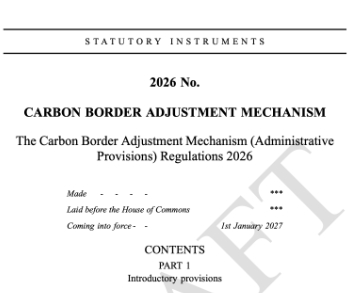
What CBAM is and what to do about it.
The new towns and strategic environmental assessments

12 locations of the New Towns Taskforce reduced to 7 within the new towns draft programme and open consultation.

Buildings that changed the future of architecture. Book review.
The Sustainability Pathfinder© Handbook
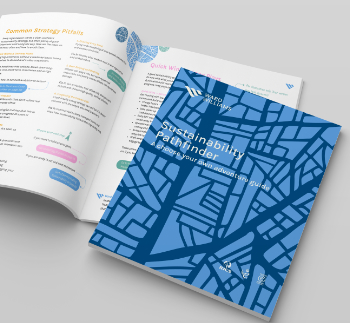
Built environment agency launches free Pathfinder© tool to help businesses progress sustainability strategies.
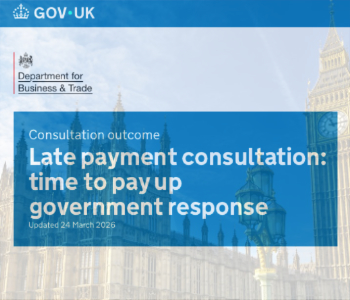
Government outcome to the late payment consultation, ECA reacts.
IHBC 2025 Gus Astley Student Award winners

Work on the role of hewing in UK historic conservation a win for Jack Parker of Oxford Brookes University.
Future Homes Building Standards and plug-in solar
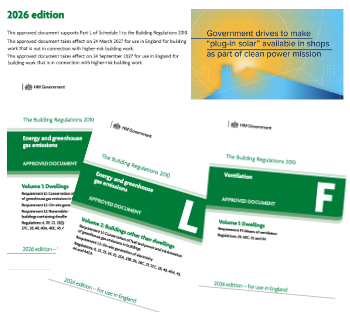
Parts F and L amendments, the availability of solar panels and industry responses.
How later living housing can help solve the housing crisis

Unlocking homes, unlocking lives.
Preparing safety case reports for HRBs under the BSA
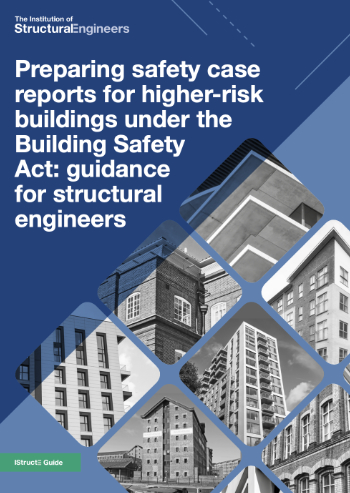
A new practical guide to preparing structural inputs for safety cases and safety case reports published by IStructE.
Male construction workers and prostate cancer

CIOB and Prostate Cancer UK encourage awareness of prostate cancer risks, and what to do about it.