




TG08 2015 At a Glance, Legionella
Legionnaires’ disease is the most serious of a number of diseases that can be caused by legionella bacteria. It is generally contracted by inhaling water droplets suspended in the air.
In November 2015, as part of a range of Topic Guides, BSRIA published a free to download guide to legionella TG08/2015 ‘At a Glance’ – Legionella.
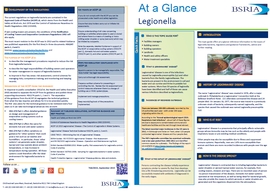
According to the guide, ‘Legionnaires disease is one of the infections caused by Legionella pneumophila (Lp) and other bacteria from the family Legionellaceae. The bacteria are present in the environment in soil and water and can survive and thrive in potable hot water systems. More than 50 species of legionella have been identified and half of these can cause various infections described as legionellosis.’
The guide offers at-a-glance reference information to the issues of legionella bacteria, regulatory and guidance frameworks, risk management to ensure compliance and sources of further information. It is aimed at those looking for basic information about legionella including definition, history and prevalence.
Expert commentary is provided by BSRIA’s Head of Energy & Environment, Reginald Brown, as he looks at cooling towers and whether they are beneficial to legionella management or prevent a higher risk.
Reginald said: “Despite the serious nature of legionella, the risk of legionnaires’ disease is relatively small. The risks in water systems can be almost eliminated through sensible design decisions and good standards of maintenance. This guide introduces you to the risks and can be used as an initial starting point in understanding how to manage said risks.”
[edit] Find out more
[edit] Related articles in Designing Buildings Wiki
Featured articles
Check out some of the best features and news from Designing Buildings as well as key stories from around the web.

Government approach could undermine delivery and regeneration.
World's first mass timber data centre.

The overlooked environmental aspect of data centre development.
Introduction to radon awareness

New technical information sheet published by CIOB.

Updated supplier guide can help electrical contractors engage with NHP.

CIAT confirm the winners of the 2026 architectural technology awards.

Government launches a one stop shop for flood preparedness.

Sir Edwin Lutyens: Britain's greatest architect? Book review.

CIOB publishes free template to help assess and manage risks.
ECA's reflections on Party Conference season

Burnham wants to be confident of winning before asking for a fresh mandate.
New Chief Construction and Scientific Adviser

Sergio Cavalaro, Professor of Infrastructure Systems at Loughborough University.
Building safety levy for England

CIAT publish estimator tool for members.

Water sector faces a growing crisis that could slow the delivery of vital infrastructure.