





Rabbet notch
Rabbet notches are small recessed grooves or channel which are cut along the edge of a piece of wood, leaving a tongue ,to allowing second to piece to overlap creating a clean and stable corner. The rabbot cut is described as having one shoulder and one bottom, the shoulder being the shorter edge and the botton being the longer edge, they are commonly used in joinery and furniture, such as drawers.
Some of the earliest chests of drawers, from around the 1600s, were made from thick, heavy hardwood boards, initially these were just butt jointed at the edges, that is not say a square cut and nailed or peggged from the side. The introduction of a groove at the edge or rabbet helped to strengthen these initially crude joints, creating a better connection and alignment, especially important for the drawers. Rabbits can be cut either with the wood grain or perpendicular to it but they are always at the very edge.
The dado notch on the other hand is always stepped in from the edge of the board, and cut at right angles to the grain of the wood, housing the end of another piece, that is either square cut or with a rabbit cut, for example to create a shelving system. In the case of the use ofg a rabbit cut on the second piece the shoulder of the rabbit gives greater rigidity to the joint. Although the term groove is used quite generically today, a groove describes a cut anywhere in the centre of the wood in the same direction as the wood grain.
[edit] Related articles on Designing Buildings
- Assembly.
- Building complex.
- Building element.
- Building entities.
- Building spaces.
- Building system.
- Component.
- Concrete joint.
- Connection.
- Construction joint.
- Contraction joint.
- Crack control joint.
- Daywork joint.
- Dowelled joint.
- Expansion joint.
- Finger joint.
- Joggle joint.
- Joint v connection.
- Junction.
- Mortar joint.
- Mortise and tenon joint.
- Movement joint.
- Off-site prefabrication of buildings: A guide to connection choices.
- Road joints.
- Rub joint.
- Scarf joint.
- Shrinkage joint.
- Tongue and groove joint.
- Warping joint.
Featured articles and news
New Scottish and Welsh governments

CIOB stresses importance of construction after new parliament elections.
The sad story of Derby Hippodrome
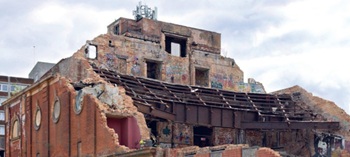
An historic building left to decay.

ECA, JIB and JTL back Fabian Society call to invest in skills for a stronger built environment workforce.

Women's Contributions to the Built Environment.
Calls for the delayed Circular Economy Strategy

Over 50 leading businesses, trade associations and professional bodies, including CIAT, and UKGBC sign open letter.
The future workforce: culture change and skill

Under the spotlight at UK Construction Week London.

A landmark moment for postmodern heritage.
A safe energy transition – ECA launches a new Charter

Practical policy actions to speed up low carbon adoption while maintaining installation safety and competency.
Frank Duffy: Researcher and Practitioner

Reflections on achievements and relevance to the wider research and practice communities.
The 2026 Compliance Landscape: Fire doors

Why 'Business as Usual' is a Liability.
Cutting construction carbon footprint by caring for soil
Is construction neglecting one of the planet’s most powerful carbon stores and one of our greatest natural climate allies.
ARCHITECTURE: How's it progressing?
Archiblogger posing questions of a historical and contextual nature.
The roofscape of Hampstead Garden Suburb
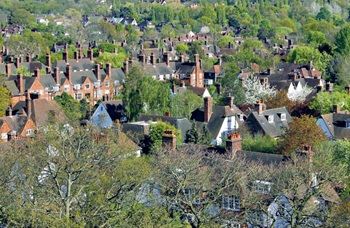
Residents, architects and roofers need to understand detailing.
Homes, landlords. tenants and the new housing standards
What will it all mean?