





Product Environmental Footprint PEF
A Product Environmental Footprint (PEF) is a Life Cycle Assessment (LCA) study of a product that complies with a framework for the calculation and representation of results that has been developed by the European commission.
A Product Carbon Footprint (PCF) is also an LCA but it differs in that it focusses on measuring, managing and communicating greenhouse gas (GHG) emissions or the global warming issues that relate to particular goods or services.
The Product Environmental Footprint (PEF) is more holistic and requires 16 different impact categories to be calculated and reported. The intention of this approach is to harmonise the many different existing LCA standards into a PEF framework that standardises and facilitates better comparison between products. Despite sometimes being used to compare products Environmental Product Declarations (EPD's) they were not designed for this, as they often use different units of measurement. EPD's are essentially individual statements on the environmental impact of a product rather than comparing like for like.
The Product Environmental Footprint (PEF) methodological framework developed by the European Commission’s science and knowledge service, relies on the principles of product categories, which group products of a similar nature or function. These in turn, generate Product Environmental Footprint Category Rules (PEFCR) which support the overall methodology and provide more product-specific guidance, potentially seen as more rigid based, to facilitate comparisons in the performance of different products. EPD's also make reference to Product Category Rules (PCR's) but these are less prescriptive than those within PEF frameworks which are continually being developed as new products are assessed.
[edit] Related articles on Designing Buildings
- BREEAM Responsible sourcing of materials.
- Carbon footprint.
- Embodied energy.
- Embodied energy in construction
- Green Guide to Specification.
- Life cycle assessment.
- Material procurement.
- Product carbon footprint (PCF).
- Product Category Rules.
- Responsible sourcing of construction products.
- Sustainability.
- Sustainable development.
- Sustainable materials for construction
- Whole life costs
Featured articles
Check out some of the best features and news from Designing Buildings as well as key stories from around the web.

Your views needed - a strategy for the professions, trades and occupations.

Confronting competency, codes, capacity and costs.

The hidden risk in modern construction supply chains.
Construction Management, 10 June

24 months to 14: CITB launches accelerated apprenticeships.
Bridging the gap between clients and contractors

Concerns remain around contractor quality, capability, and delivery.
Construction Management, 10 June.
Heat pumps beat boilers in new home tests.
Building Safety Act implementation in Wales

CIAT to host industry panel on 26 June.
New and updated CLC building safety guidance.
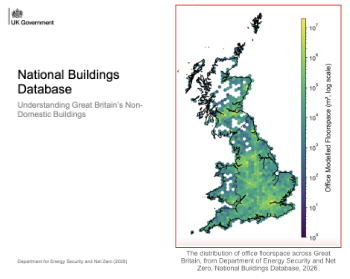
New UK National Buildings Database.
Building Safety Wiki Interviews

Chief executive of the British Woodworking Federation.
Planning condition discharge in England and Wales

A brief explanation from a building compliance expert, with further links.