





Operational carbon
‘Climate Emergency Design Guide: How new buildings can meet UK climate change’, published by The London Energy Transformation Initiative (LETI) in January 2020 defines Operational carbon (kgCO2e) as:
‘The carbon dioxide and equivalent global warming potential (GWP) of other gases associated with the in-use operation of the building. This usually includes carbon emissions associated with heating, hot water, cooling, ventilation, and lighting systems, as well as those associated with cooking, equipment, and lifts (i.e. both regulated and unregulated energy uses).
Net zero operational carbon refers to: 'A new building that achieves a level of energy performance in-use in line with our national climate change targets that does not burn fossil fuels and that is 100% powered by renewable energy.'
Embodied Carbon: Developing a Client Brief, published by the UK Green Building Council (UKGBC) in March 2017, defines operational carbon as: ‘Carbon emissions’ association with energy consumption (operational energy) while the building is occupied. This includes the regulated load (e.g. heating, cooling, ventilation, lighting) and unregulated/plug load (e.g. ICT equipment, cooking, refrigeration appliances).’
Improving Consistency in Whole Life Carbon Assessment and Reporting, Carbon Definitions for the Built Environment, Buildings and Infrastructure, Version ‘A’, May 2021, published by WLCN, LETI and RIBA, defines operational carbon - energy as: …the GHG (greenhouse gas) emissions arising from all energy consumed by an asset in-use, over its life cycle.’
It defines operational carbon – water as: ‘…those GHG emissions arising from water supply and wastewater treatment for an asset in-use, over its life cycle.’
BG 87/2024, Useful Information Guide, written by Chin Hang “Kay” Lam and published by BSRIA in 2024, defines operational energy or operational carbon as: ‘Energy used or carbon emissions generated during the occupation and use of a building by the heating, cooling, ventilation, water heating and lighting.’
[edit] Related articles on Designing Buildings
Featured articles
Check out some of the best features and news from Designing Buildings as well as key stories from around the web.
Your views needed - a strategy for the professions, trades and occupations.

Confronting competency, codes, capacity and costs.
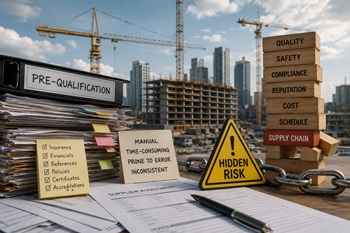
The hidden risk in modern construction supply chains.
Construction Management, 10 June

24 months to 14: CITB launches accelerated apprenticeships.
Bridging the gap between clients and contractors
Concerns remain around contractor quality, capability, and delivery.
Construction Management, 10 June.
Heat pumps beat boilers in new home tests.
Building Safety Act implementation in Wales
CIAT to host industry panel on 26 June.
New and updated CLC building safety guidance.
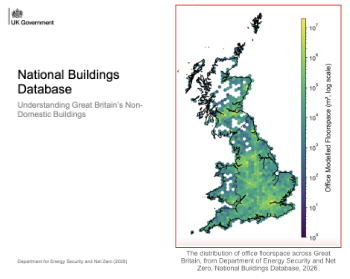
New UK National Buildings Database.
Building Safety Wiki Interviews

Chief executive of the British Woodworking Federation.
Planning condition discharge in England and Wales

A brief explanation from a building compliance expert, with further links.