




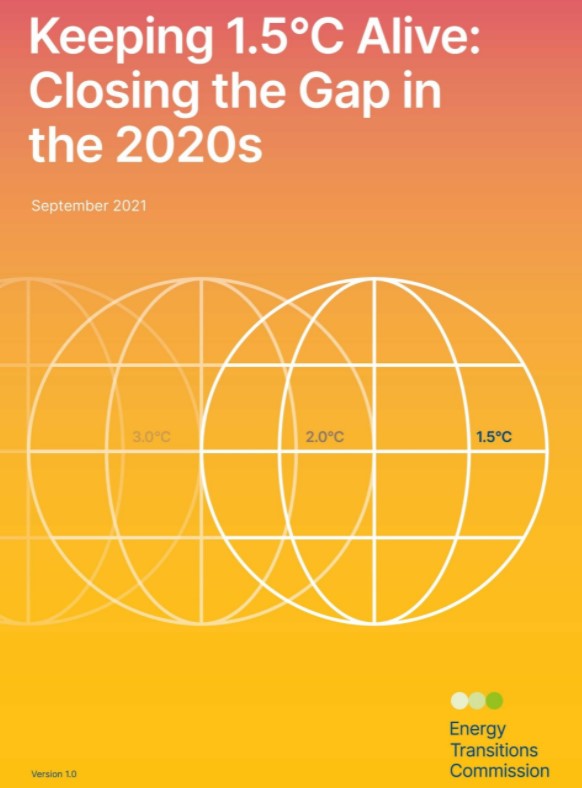
Keeping 1.5°C Alive: Closing the Gap in the 2020s
|
Contents |
[edit] Introduction
On 30 September 2021, the Energy Transitions Commission (ETC) set out the actions which nations and companies could take during the 2020s to deliver the Paris agreement and limit global warming to 1.5°C. The ETC is a global coalition of leaders from across the energy landscape committed to achieving net zero emissions by the middle of the century.
[edit] Six action items
Keeping 1.5°C Alive: Closing the Gap in the 2020s describes technologically feasible actions which could close the gap created by national decarbonisation pledges (known as Nationally Determined Contributions, or NDCs) that fall short of those needed to prevent global warming from exceeding 1.5°C above pre-industrial levels. An additional 17-20 Gt of CO2 reductions and a 40% reduction in methane emissions would be needed to achieve that objective.
The six categories of action identified by the ETC are:
- Significant and rapid reductions in methane emissions.
- Halting deforestation and beginning reforestation.
- Decarbonising the power sector and accelerating the phaseout of coal.
- Accelerating the electrification of road transport.
- Accelerating supply decarbonisation in buildings, heavy industry, and heavy transport.
- Reinvigorating energy and resource efficiency.
The actions in the report might be achievable with minimal cost, and their adoption could spur further innovation and support green economic development. All six of the actions could be given impetus at COP26 via commitments from leading countries and companies without the need for comprehensive international agreement. However, two high priority actions – ending deforestation and reducing emissions from existing coal plants – will require support from climate finance flows from rich developed countries.
[edit] Related articles
- Climate Change Act.
- Decarbonise.
- Economic development and construction.
- Forests.
- Methane.
- Nationally Determined Contribution.
[edit] External resources
Featured articles
Check out some of the best features and news from Designing Buildings as well as key stories from around the web.

Government approach could undermine delivery and regeneration.
World's first mass timber data centre.

The overlooked environmental aspect of data centre development.
Introduction to radon awareness

New technical information sheet published by CIOB.

Updated supplier guide can help electrical contractors engage with NHP.

CIAT confirm the winners of the 2026 architectural technology awards.

Government launches a one stop shop for flood preparedness.

Sir Edwin Lutyens: Britain's greatest architect? Book review.

CIOB publishes free template to help assess and manage risks.
ECA's reflections on Party Conference season

Burnham wants to be confident of winning before asking for a fresh mandate.
New Chief Construction and Scientific Adviser

Sergio Cavalaro, Professor of Infrastructure Systems at Loughborough University.
Building safety levy for England

CIAT publish estimator tool for members.

Water sector faces a growing crisis that could slow the delivery of vital infrastructure.