





Institution of Mechanical Engineers
Mechanical engineers work on a variety of projects from research and development into products, to improving industrial production systems, and designing services in buildings. They develop processes and products ranging from small mechanical components to large plant, machinery and vehicles. They are involved in all stages of the project life cycle from design through to testing and final manufacture.
The Institution of Mechanical Engineers (IMechE) was founded in 1847, ‘To give an impulse to invention likely to be useful to the world’. It now has over 100,000 members in more than 140 countries.
The institute describes mechanical engineering as ‘…taking science and using it to produce things… translating theoretical research into practical solutions and applications which are used by society’.
It describes its current mission as ‘Improving the world through engineering’, which it delivers by:
- Creating and sharing knowledge.
- Providing independent advice.
- Nurturing talent.
- Providing training.
- Running events.
- Running awards.
- Promoting engineering in schools and to the media.
The activities of the institute cover:
- The energy sector.
- Sustainability.
- Transport.
- Manufacturing.
- Education.
The institute has a president, and is governed by a Trustee Board whose responsibilities are set out in its Royal Charter, By-laws, Trustee Role Profile and Code of Conduct. The Trustee Board is advised by a Council on issues such as strategy and membership.
Members of the institute can use the letters MIMechE after their names.
Affiliate members can become associate members once they have a suitable degree in a STEM (Science, Technology, Engineering or Mathematics) subject, and are then able to use the letters AMIMechE.
Associate members of the institute can apply to become a Chartered Engineer (CEng), Incorporated Engineer (IEng) or Engineering Technician (EngTech). This requires suitable academic qualifications, professional work experience and a professional review interview.
Members of the institute are required to undertake continuing professional development (CPD) to ensure their skills and knowledge remain up-to-date.
[edit] Find out more
[edit] Related articles on Designing Buildings Wiki
- CPD.
- Electrical engineer.
- Engineer.
- Engineering Council.
- HVAC.
- Mechanical and electrical.
- Mechanical engineer.
- Mechanical ventilation.
[edit] External references
Featured articles
Check out some of the best features and news from Designing Buildings as well as key stories from around the web.
New and updated CLC building safety guidance.
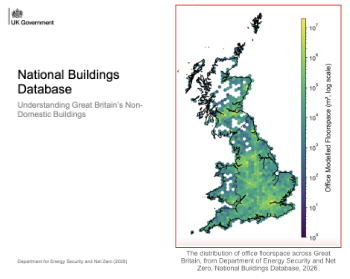
New UK National Buildings Database.
Building Safety Wiki Interviews

Chief executive of the British Woodworking Federation.
Planning condition discharge in England and Wales

A brief explanation from a building compliance expert, with further links.
Overheating guidance and tools for building designers

Guidance for dealing with element of building fabric control that have increasing importance.
Shading for housing, a design guide

From the Good Homes Alliance and British Blind and Shutter Association.
UK Standard Skills Classification (SSC)

A shared framework for describing skills needs.
Social media ban consultation comes to close

CIOB urges UK Government to consider social media’s role in careers guidance in ban debate.
The latest of eight Skills England apprenticeship units

The addition of battery manufacturing welcomed by ECA with a warning about the risks of fast-tracked apprenticeship units.
Building Control Independent Panel final report

A precis of a key report led by Dame Hackitt with full recommendations and link to the government response.
Building Safety recap April, 2026

A short and longer run-through of the month, with links to further information and sources.