




IHBC adopts new Articles of Association at 2020 AGM

Contents |
[edit] Introduction
The IHBC held its annual general meeting (AGM) on 3 December 2020, during which time its members adopted the organisation's new Articles of Association – ‘paving the way for modernisation and more’. After this order of business was complete, members discussed strategies and prospects – from furloughing to chartership. The entire programme was conducted online in a virtual format.
[edit] Analysis of actions
The adoption of new Articles of Association secures the foundation for a more contemporary structure and more substantial governance, as well as a more inclusive approach to membership and practitioner support.
Major developments from the original constitution include:
- A board with elected trustees focussed first on the duties of a trustee.
- An overseeing and advisory council that blends elected, nominated and selected representatives from across the UK-wide branches and membership.
- A mandate to draw up byelaws that represent the same modern standards seen in the new Articles, while also reflecting the unique legacy, profile, needs and aspirations of the IHBC’s interdisciplinary membership and multidisciplinary members, its committees, working groups and practice networks.
The IHBC has already received approval for the changes from UK charity regulators in line with guidance.
[edit] Commentary
IHBC President Mike Brown said: ‘The enthusiastic adoption by our members of the new Articles marks the next step in the modernisation of the IHBC as a specialist and professional body and charity for the 21st century. As such, they are paving the way for our modernisation and much more.’
IHBC Chair David McDonald said: ‘The IHBC supports both conservation standards for built and historic specialists as well as a wider spectrum of cost-effective services and guidance for the diverse players that shape our valued places. Our members and networks need the best and most flexible support we can offer, and these articles will underpin our response to their needs: cultural, social, environmental and economic.’
IHBC Secretary Jo Evans said: ‘We will now build our byelaws to align with the new constitutional framework, while also reflecting both our practice needs and our legacy. If these raise issues with any aspects of the Articles, we will look at those again too.’
IHBC Director Seán O’Reilly said: ‘The new Articles were redrafted by our legal advisers Knights Solicitors under the close oversight of the IHBC Board. They represent the final conclusion to the "experimental evolution" that proved so successful in our IHBC+ over the last five years. The real works starts now: with the next stage simple to point out, but infinitely complex to deliver: Build in the new governance, and then step up again!
‘Our new Corporate Plan for 2020-25, also adopted at the AGM, will be critical to guiding us in these next steps.’
See the background to the modernisation of the IHBC’s governance here.
This article originally appeared on the IHBC website under the headline, 'IHBC’s 2020 AGM adopts new Articles of Association: "Paving the way for our modernisation and much more"’. It was written by Joanna Theobald 4 December 2020.
--Institute of Historic Building Conservation
[edit] Related articles on Designing Buildings Wiki
- Historic environment good practice advice.
- IHBC articles.
- The Institute of Historic Building Conservation.
[edit] External resources
IHBC NewsBlog
IHBC sponsors Gardens Trust event 23-4 Sept 2026
.jpeg)
'Learning from the Past, Shaping the Future’ takes place in Milton Keynes
Renovations to Frank Lloyd Wright's Fallingwater complete
.jpg)
World Heritage Preserved project opens house for tours again
Shakespeare Birthplace Trust places Hall's Croft on HAR Register
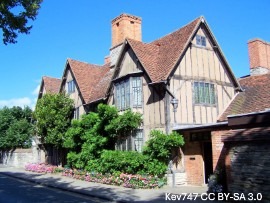
Stratford-upon-Avon home of Shakespeare's daughter is 'At Risk'
Lady Grange’s House repaired on St Kilda
.jpg)
National Trust for Scotland repairs stone cleit with link to famous island resident
Griff Rhys Jones on BBC Radio 4 Today programme
,_Green_Lane,_Derby.jpg)
The Victorian Society’s President unveiled its latest Top Ten Endangered Buildings 2026.
Need a MATE? Book your place now.
IHBC offers free webinars on applying for IHBC accreditation (Full & Associate).
UK Stained Glass Repository finds windows new homes
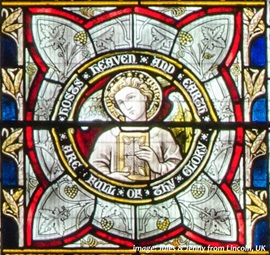
How are stained glass windows are rescued, stored and repurposed?
APPGEBE report sets high aims for quality
'Government must not sacrifice quality in drive to build 1.5m homes'
New measures protect Historic Shipwrecks from heritage crime

Underwater cultural heritage benefits from new HE guidance
How could the City of London skyline look in 6 years' time?

Visualisation shows approved planning applications as completed buildings
National Trust for Scotland calls for VAT cuts
Heritage neglect is encouraged by current policies
IHBC's 'Context' Issue 186 features Industrial Heritage
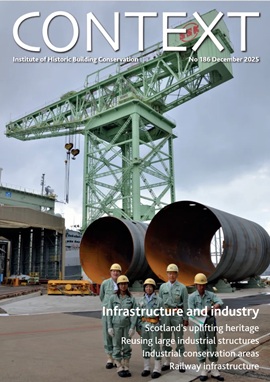
IHBC's members' journal reports on the challenges of conserving infrastructure
Book now for IHBC Annual School 2026
IHBC Annual School is taking place 18-20 June 2026 in Newcastle
RICHeS Research Infrastructure offers ‘Full Access Fund Call’
RICHeS offers a ‘Help’ webinar on 11 March
Latest IHBC Issue of Context features Roofing
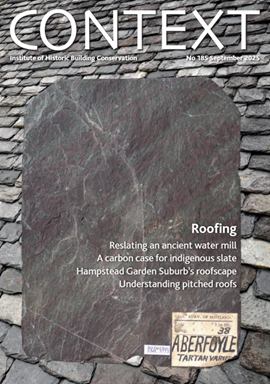
Articles range from slate to pitched roofs, and carbon impact to solar generation to roofscapes
Three reasons not to demolish Edinburgh’s Argyle House

Should 'Edinburgh's ugliest building' be saved?
IHBC’s 2025 Parliamentary Briefing...from Crafts in Crisis to Rubbish Retrofit
IHBC launches research-led ‘5 Commitments to Help Heritage Skills in Conservation’
How RDSAP 10.2 impacts EPC assessments in traditional buildings

Energy performance certificates (EPCs) tell us how energy efficient our buildings are, but the way these certificates are generated has changed.