





Gross floor area GFA
The area of a building can be measured in a number of different ways, and it is very important to be clear about which measure is being used, for example in property sales, planning applications, building regulations applications, lease negotiations, rating valuations and so on.
The term 'gross floor area' (GFA) is a very confusing one that has different meanings around the world, and even within some countries.
Part L of the UK building regulations suggest that it is equivalent to the total useful floor area (TUFA), which is the '...total area of all enclosed spaces measured to the internal face of the external walls.'
However, in many countries gross floor area is taken to be the total enclosed space including the external walls.
For this reason it is clearer to use the terms:
- Gross internal area: The enclosed area of a building within the external walls taking each floor into account but excluding the thickness of the external walls.
- Gross external area: The whole area of the building, including external walls.
Precise definitions for the accurate measurement of buildings are set out by the Royal Institution of Chartered Surveyors in the RICS Code of Measuring Practice.
[edit] Related articles on Designing Buildings Wiki
- Beneficial occupation.
- Case notes for rating valuation (Garton V Hunter).
- Choice of method for rating valuation.
- Contractor’s basis for rating valuation.
- Gross development area.
- Gross external area.
- Gross internal area.
- Gross site area.
- New rules of measurement.
- Net internal area.
- Profits method of rating valuation.
- Rating valuation.
- Rental method of rating valuation.
- Statutory formulae for rating valuation.
- Total useful floor area.
Featured articles
Check out some of the best features and news from Designing Buildings as well as key stories from around the web.

The hidden risk in modern construction supply chains.
Construction Management, 10 June

24 months to 14: CITB launches accelerated apprenticeships.
Bridging the gap between clients and contractors

Concerns remain around contractor quality, capability, and delivery.
Construction Management, 10 June.
Heat pumps beat boilers in new home tests.
Building Safety Act implementation in Wales

CIAT to host industry panel on 26 June.
New and updated CLC building safety guidance.
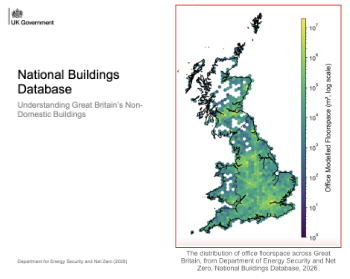
New UK National Buildings Database.
Building Safety Wiki Interviews

Chief executive of the British Woodworking Federation.
Planning condition discharge in England and Wales

A brief explanation from a building compliance expert, with further links.
Overheating guidance and tools for building designers

Guidance for dealing with element of building fabric control that have increasing importance.
Shading for housing, a design guide

From the Good Homes Alliance and British Blind and Shutter Association.