





Ecological Friendly House
This article needs more work, help us develop this article, create a profile, click 'Edit this article' and have a go !
In today's world, where more and more people are trying to conserve energy and money, we are increasingly turning to the idea and lifestyle of living in an environmentally-friendly house. The idea of being fully sustainable and of being able to give back precious energy and nutrients to the environment. However many have little knowledge of what this actually means.
There are no set rules about what an ecologically friendly house or "Eco" house should actually feature. Some include solar panels or recycled kitchen appliances. What needs to be considered when planning an individual ecological house, is what you want to get out from it. Do you want to live 'off the grid' and be self sufficient in all energy needs? Or do you simply want to grow your own vegetables in an environmentally-friendly manner? What you want to achieve will help guide you during the planning process. In essence, you should have an end plan and work from there. The German Eco House Pioneer Baufritz offers some great insights and best practices for ecological housing.
The main aim is to save as much natural energy as possible, conserving water, food, materials and household energy, such as gas and electricity. An ecological house can also store and then use conserved energy.
The ecological house is planned around a circular flow of energy throughout. For example, if the ecological house has solar panels placed upon its roof or in the garden, then it is able to store and use the natural power of the sun to heat water for washing and bathing. This therefore helps to save precious fossil fuels as well as helping to reduce household energy bills.
The ecological home is based upon nature's ecosystem, but what does this mean? Basically an ecosystem is a group of living organisms that live alongside nonliving components in their environment. So these nonliving components are those such as air, water and soil. All of these elements interact as one unit and as one ecological 'system'. They are linked together via energy flows and a highly-efficient nutrient system. It is also important to note that the energy that is created and flows throughout the system is mainly that of the sun.
We can replicate nature's ecosystem in the home. One great way to do so is by saving food scraps and then creating a new ecological garden from them. The food scraps can be used as nutrient-rich plant food to grow herbs and vegetables.
Reusing water is another possibility. By saving and using shower water or 'grey water' in the garden, you are helping to save precious water and feeding your plants the natural way without any chlorine. Having water butts in the garden is also a good way in which to water the garden from the natural elements. The ecological home can improve the energy life cycle of a home, while at the same time being kinder to the environment.
Featured articles and news
The roofscape of Hampstead Garden Suburb
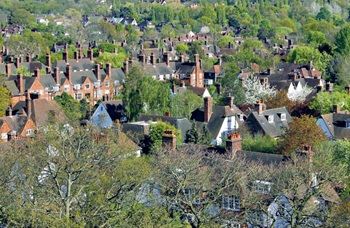
Residents, architects and roofers need to understand detailing.
Homes, landlords. tenants and the new housing standards
What will it all mean?
The Architectural Technology podcast: Where it's AT

Catch-up on the latest episodes.
Edmundson Apprentice of the Year award 2026
Entries now open for this Electrical Contractors' Association award.
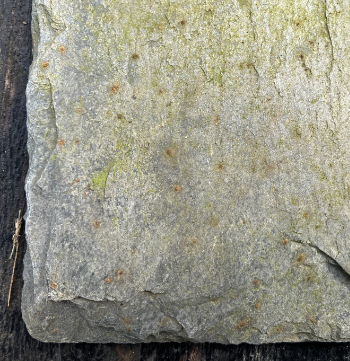
Traditional blue-grey slate from one of the oldest and largest UK slate quarries down in Cornwall.

There are plenty of sources with the potential to be redeveloped.
Change of use legislation breaths new life into buildings

A run down on Class MA of the General Permitted Development Order.
Solar generation in the historic environment
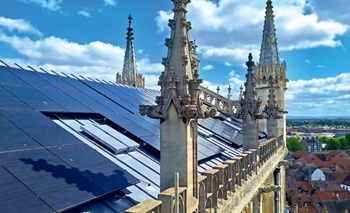
Success requires understanding each site in detail.
Level 6 Design, Construction and Management BSc

CIOB launches first-ever degree programme to develop the next generation of construction leaders.

Open for business as of April, with its 2026 prospectus and new pipeline of housing schemes.
The operational value of workforce health

Keeping projects moving. Incorporating unplanned absence and the importance of health, in operations.
A carbon case for indigenous slate
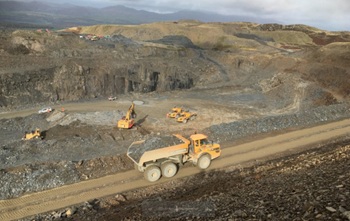
UK slate can offer clear embodied carbon advantages.
Costs and insolvencies mount for SMEs, despite growth
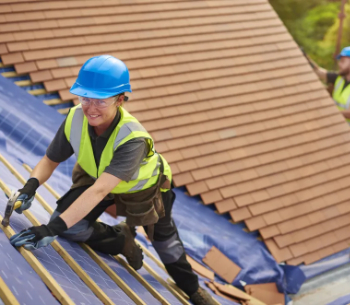
Construction sector under insolvency and wage bill pressure in part linked to National Insurance, says report.
The place for vitrified clay pipes in modern infrastructure
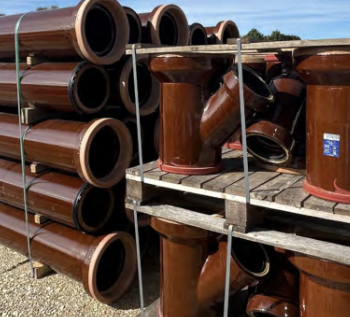
Why vitrified clay pipes are reclaiming their role in built projects.
Research by construction PR consultancy LMC published.
Roles and responsibilities of domestic clients

ACA Safety in Construction guide for domestic clients.