





Burland scale
The Burland Scale is used to describe or measure the damage (or risk of damage) to properties as a result of changes such as subsidence. It may be used for example to assess the risk of damage as part of a basement impact assessment.
It categorises the damage to properties as:
- Visual appearance or aesthetics.
- Serviceability and function.
- Stability.
Where:
- Categories 0, 1, and 2 refer to (i) aesthetic damage.
- Category 3 and 4 relate to (ii) serviceability and function.
- Category 5 relates to (iii) stability.
| Category of damage | Description of typical damage | Approximate crack width (mm) | Limiting tensile strain εlim (%) |
| 0 Negligible | Hairline cracks of less than about 0.1 mm are classed as negligible | <0.1 | 0.0-0.05 |
| 1 Very slight | Fine cracks that can easily be treated during normal decoration. Perhaps isolated slight fracture in building. Cracks in external brickwork visible on inspection | <1 | 0.05-0.075 |
| 2 Slight | Cracks easily filled. Redecoration probably required. Several slight fractures showing inside of building. Cracks are visible externally and some repointing may be required externally to ensure weathertightness. Doors and windows may stick slightly. | <5 | 0.075-0.15 |
| 3 Moderate | The cracks require some opening up and can be patched by a mason. Recurrent cracks can be masked by suitable lining. Repointing of external brickwork and possibly a small amount of brickwork to be replaced. Doors and windows sticking. Service pipes may fracture. Weathertightness often impaired. | 5-15 or a number of cracks > 3 | 0.15-0.3 |
| 4 Severe | Extensive repair work involving breaking-out and replacing sections of walls, especially over doors and windows. Windows and frames distorted, floor sloping noticeably. Walls leaning or bulging noticeably, some loss of bearing in beams. Service pipes disrupted. | 15-25 but also depends on number of cracks | >0.3 |
| 5 Very severe | This requires a major repair involving partial or complete rebuilding. Beams lose bearings, walls lean badly and require shoring. Windows broken with distortion, Danger of instability. | Usually > 25 but depends on number of cracks |
[edit] Related articles on Designing Buildings Wiki:
Featured articles and news
The roofscape of Hampstead Garden Suburb

Residents, architects and roofers need to understand detailing.
Homes, landlords. tenants and the new housing standards

What will it all mean?
The Architectural Technology podcast: Where it's AT

Catch-up on the latest episodes.
Edmundson Apprentice of the Year award 2026

Entries now open for this Electrical Contractors' Association award.
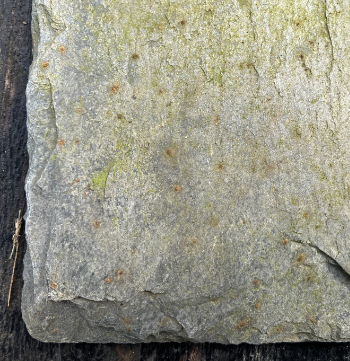
Traditional blue-grey slate from one of the oldest and largest UK slate quarries down in Cornwall.
There are plenty of sources with the potential to be redeveloped.
Change of use legislation breaths new life into buildings

A run down on Class MA of the General Permitted Development Order.
Solar generation in the historic environment

Success requires understanding each site in detail.
Level 6 Design, Construction and Management BSc

CIOB launches first-ever degree programme to develop the next generation of construction leaders.

Open for business as of April, with its 2026 prospectus and new pipeline of housing schemes.
The operational value of workforce health

Keeping projects moving. Incorporating unplanned absence and the importance of health, in operations.
A carbon case for indigenous slate
UK slate can offer clear embodied carbon advantages.
Costs and insolvencies mount for SMEs, despite growth

Construction sector under insolvency and wage bill pressure in part linked to National Insurance, says report.
The place for vitrified clay pipes in modern infrastructure
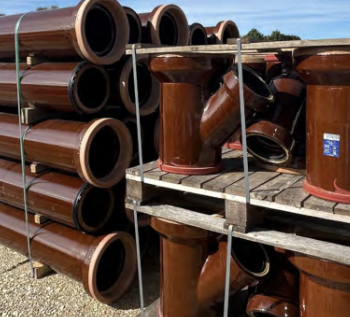
Why vitrified clay pipes are reclaiming their role in built projects.

Research by construction PR consultancy LMC published.
Roles and responsibilities of domestic clients
ACA Safety in Construction guide for domestic clients.