





Perfect competition
The glossary of statistical terms, published by the Organisation for Economic Co-operation and Development (OECD), suggests perfect competition is defined by four conditions in a well-defined market:
- ‘There is such a large number of buyers and sellers that none can individually effect the market price. This means that the demand curve facing an individual firm is perfectly elastic.
- ‘In the long run, resources must be freely mobile, meaning that there are no barriers to entry and exit.
- ‘All market participants (buyers and sellers) must have full access to the knowledge relevant to their production and consumption decisions.
- ‘The product should be homogenous.
‘When these conditions are fulfilled in any well-defined market, the market is perfectly competitive; when they are fulfilled in all markets, the economy is perfectly competitive.’
[edit] Related articles on Designing Buildings
Featured articles
Check out some of the best features and news from Designing Buildings as well as key stories from around the web.
Bridging the gap between clients and contractors

Concerns remain around contractor quality, capability, and delivery.
Construction Management, 10 June.

Heat pumps beat boilers in new home tests.
Building Safety Act implementation in Wales

CIAT to host industry panel on 26 June.

New and updated CLC building safety guidance.
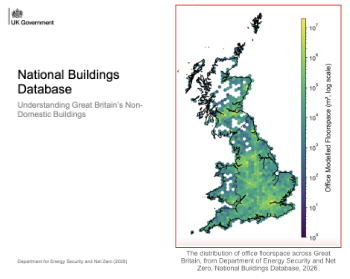
New UK National Buildings Database.
Building Safety Wiki Interviews

Chief executive of the British Woodworking Federation.
Planning condition discharge in England and Wales

A brief explanation from a building compliance expert, with further links.
Overheating guidance and tools for building designers

Guidance for dealing with element of building fabric control that have increasing importance.
Shading for housing, a design guide

From the Good Homes Alliance and British Blind and Shutter Association.
UK Standard Skills Classification (SSC)

A shared framework for describing skills needs.
Social media ban consultation comes to close

CIOB urges UK Government to consider social media’s role in careers guidance in ban debate.