






James Davidson civil engineer
This article is part of ICE's Engineer biographies series.
DAVIDSON, James (1798-1877), civil engineer, was born in 1798, the youngest of three sons of Matthew Davidson (q.v.), master mason of Langholm. Matthew Davidson's three sons were all born in Wales and were welcomed as apprentices of Telford in London, but in the end Thomas and John gave up engineering and became surgeons.
James, however, was already sufficiently experienced and well thought of by Telford to be appointed to succeed his father on his death in 1819. He was elected a member of the Institution of Civil Engineers in 1820.
He described the works carried out at Clacknaharry under his father's superintendence, where the ground for the lock was preloaded, a notable case study in the early development of practical soil mechanics. The Caledonian Canal was opened to shipping in October 1822, but for many years afterwards it was necessary to carry out major repairs and improvements.
James succeeded Alexander Easton (q.v.) in 1823 as resident engineer for the whole canal, at a salary of £300 p.a., but in 1829 he was advised for the sake of his health to seek a warmer climate, and he remitted his responsibilities to George May, the toll collector at Clacknaharry; when it became clear that he would be unable to return for some time, May became resident engineer.
George May died in August 1867 and was succeeded by James Davidson once more. He had returned to live with his wife, Eliza Green, at Burnfoot, near Inverness. After his death at Inverness on 30 September 1877 his estate was recorded as £990.
Works:
- 1819-1823. Caledonian Canal, eastern section Resident Engineer
- 1823-1829- Caledonian Canal, Resident Engineer 1867-1877. Caledonian Canal, Resident Engineer
This text is an extract from A Biographical Dictionary of Civil Engineers in Great Britain and Ireland, published by ICE in 2002. Beginning with what little is known of the lives of engineers such as John Trew who practised in the Tudor period, the background, training and achievements of engineers over the following 250 years are described by specialist authors, many of whom have spent a lifetime researching the history of civil engineering.
Featured articles and news

ECA, JIB and JTL back Fabian Society call to invest in skills for a stronger built environment workforce.

Women's Contributions to the Built Environment.
Calls for the delayed Circular Economy Strategy

Over 50 leading businesses, trade associations and professional bodies, including CIAT, and UKGBC sign open letter.
The future workforce: culture change and skill

Under the spotlight at UK Construction Week London.
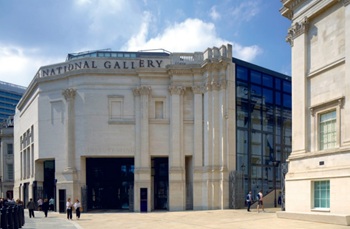
A landmark moment for postmodern heritage.
A safe energy transition – ECA launches a new Charter

Practical policy actions to speed up low carbon adoption while maintaining installation safety and competency.
Frank Duffy: Researcher and Practitioner
Reflections on achievements and relevance to the wider research and practice communities.
The 2026 Compliance Landscape: Fire doors

Why 'Business as Usual' is a Liability.
Cutting construction carbon footprint by caring for soil

Is construction neglecting one of the planet’s most powerful carbon stores and one of our greatest natural climate allies.
ARCHITECTURE: How's it progressing?

Archiblogger posing questions of a historical and contextual nature.
The roofscape of Hampstead Garden Suburb
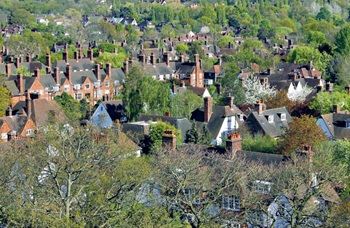
Residents, architects and roofers need to understand detailing.
Homes, landlords. tenants and the new housing standards

What will it all mean?
The Architectural Technology podcast: Where it's AT

Catch-up on the latest episodes.
Edmundson Apprentice of the Year award 2026

Entries now open for this Electrical Contractors' Association award.
Traditional blue-grey slate from one of the oldest and largest UK slate quarries down in Cornwall.
There are plenty of sources with the potential to be redeveloped.
Change of use legislation breaths new life into buildings

A run down on Class MA of the General Permitted Development Order.
Solar generation in the historic environment
Success requires understanding each site in detail.