





Horizontal Axis Wind Turbine HAWT
This type of wind turbine is the most common and seen across Europe. In simple terms it is 'a wind turbine whose rotor axis is substantially parallel to the wind flow.' (Wind Energy - The Facts. March 2009. A European project financed by the Intelligent Energy).
In general HAWTs used on an industrial scale, such offshore location are most commonly placed upwind, that is to say that the rotor bladed are positioned in front of the tower to face the wind, with the gear and generation system behind. These upwind HAWTs are most popular as the offer higher energy efficiencies because the wind hits the blades directly as opposed to hitting the mechanism first and then the blades as is the case with downwind turbines. The advantage of down wind turbines is that they can pivot in the direction of the wind by using only the wind, as a sail might do by catching the air behind, upwind turbines need to be mechanically turned to face the wind.
Both upwind and and downwind HAWTs can have varying numbers of blades, normally two or three spaced evenly, but single blade turbines do exist as well as small fan turbines with a higher number of blades spaced evenly around the central nose.
Featured articles
Check out some of the best features and news from Designing Buildings as well as key stories from around the web.
Construction Management, 10 June

24 months to 14: CITB launches accelerated apprenticeships.
Bridging the gap between clients and contractors

Concerns remain around contractor quality, capability, and delivery.
Construction Management, 10 June.
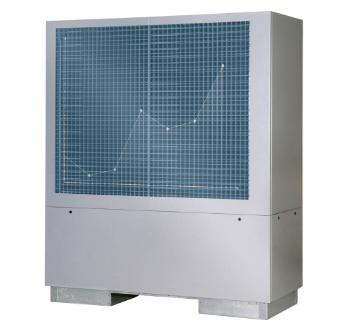
Heat pumps beat boilers in new home tests.
Building Safety Act implementation in Wales

CIAT to host industry panel on 26 June.
New and updated CLC building safety guidance.
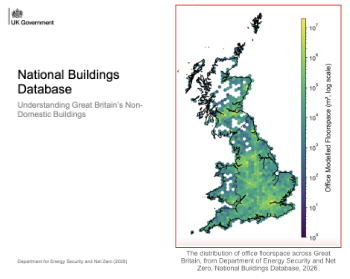
New UK National Buildings Database.
Building Safety Wiki Interviews

Chief executive of the British Woodworking Federation.
Planning condition discharge in England and Wales

A brief explanation from a building compliance expert, with further links.
Overheating guidance and tools for building designers

Guidance for dealing with element of building fabric control that have increasing importance.
Shading for housing, a design guide

From the Good Homes Alliance and British Blind and Shutter Association.
UK Standard Skills Classification (SSC)

A shared framework for describing skills needs.