





Hadley Cell
The Hadly cell decribes how warm air rises near the equator, then travels towards the pole at high altitude. As it cools it sinks and then warms again as it travels towards the equator. These are the largest global circulation cells as they extend from the equator to between 30 and 40 degrees North and South.
This model of the earth’s atmospheric circulation was proposed by George Hadley in 1735 to explain trade winds blowing westward and towards the equator. The missing element in his model was the impact of the earths rotation or the Coriolis effect, which also deflects air sideways complicating the simple north-south circulation theory.
Later the Ferrel cell or Mid Cell was proposed to account for mid latitude westerly winds as statistically averaged circulation. Air converges at low altitudes and ascends along the boundaries of cool polar air and warm subtropical air around between 60 and 70 degrees north and south. This is often near the latitude of the UK, hence the varying weather patterns of that region. The circulation of this cell is impacted by the return flow of high altitude air around the tropics, where it joins sinking air from the Hadley cell. These cells move in the opposite direction of that of the Hadley and Polar cells, the smallest and weakest cells extending 60 to 70 degrees north and south, this air sinks over the highest latitudes and flows out towards the lower latitudes at the surface.
Atmospheric circulation around the Earth is impacted by all three cells (and jet streams) along with the Corriolis effect.
[edit] Related articles on Designing Buildings
Featured articles
Check out some of the best features and news from Designing Buildings as well as key stories from around the web.
New and updated CLC building safety guidance.
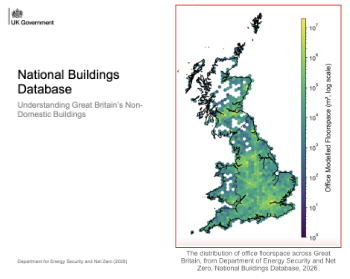
New UK National Buildings Database.
Building Safety Wiki Interviews

Chief executive of the British Woodworking Federation.
Planning condition discharge in England and Wales

A brief explanation from a building compliance expert, with further links.
Overheating guidance and tools for building designers

Guidance for dealing with element of building fabric control that have increasing importance.
Shading for housing, a design guide

From the Good Homes Alliance and British Blind and Shutter Association.
UK Standard Skills Classification (SSC)

A shared framework for describing skills needs.
Social media ban consultation comes to close

CIOB urges UK Government to consider social media’s role in careers guidance in ban debate.
The latest of eight Skills England apprenticeship units

The addition of battery manufacturing welcomed by ECA with a warning about the risks of fast-tracked apprenticeship units.
Building Control Independent Panel final report
A precis of a key report led by Dame Hackitt with full recommendations and link to the government response.
Building Safety recap April, 2026

A short and longer run-through of the month, with links to further information and sources.