





Design and manage procurement route
Contents |
[edit] Introduction
The design and manage procurement route shares several characteristics of management contracting.
Under this arrangement, the works are constructed by a number of different works contractors who report to a management contractor who is selected early in the process. The management contractor assumes responsibility for the other contractors and the design team. This procurement approach is suitable for large, complex projects or fast track projects.
It may also be a preferred method when the client wishes to have one point of contact who is responsible for everything. A single point of contact is also the case with the design and build procurement route, although some clients feel this route is only appropriate for simple projects where design quality is not the first priority.
[edit] Variations
There are two common variations of the design and manage procurement route:
- The organisation is paid to design and manage the work and delivers the project by hiring subcontractors to design and construct the project.
- The organisation is paid as a consultant to act as the agent of the client to design and manage the work by obtaining subcontract tenders from works contractors who then each enter into a direct contract with the client.
[edit] Advantages and disadvantages
Potential benefits to the design and manage procurement route include:
- A collaborative relationship between the design and manage contractor and the client.
- Fewer delays caused by a lack of information or miscommunication.
- Clearer delineation of overall financial responsibilities for the default of sub-contractors.
Possible negative aspects of the design and manage procurement process include:
- The duplication of resources between trade contractors and the design and manage contractor, resulting in a higher prices.
- A lack of an established contract sum, resulting in an estimate created by the quantity surveyor and then endorsed by the design and manage contractor; it is then confirmed along the way as tendering progresses and the works proceed.
[edit] Related articles on Designing Buildings Wiki
Featured articles
Check out some of the best features and news from Designing Buildings as well as key stories from around the web.
Building Safety Act implementation in Wales

CIAT to host industry panel on 26 June.
New and updated CLC building safety guidance.
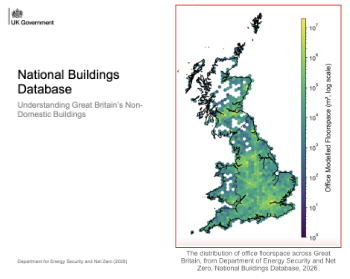
New UK National Buildings Database.
Building Safety Wiki Interviews

Chief executive of the British Woodworking Federation.
Planning condition discharge in England and Wales

A brief explanation from a building compliance expert, with further links.
Overheating guidance and tools for building designers

Guidance for dealing with element of building fabric control that have increasing importance.
Shading for housing, a design guide

From the Good Homes Alliance and British Blind and Shutter Association.
UK Standard Skills Classification (SSC)

A shared framework for describing skills needs.
Social media ban consultation comes to close

CIOB urges UK Government to consider social media’s role in careers guidance in ban debate.
The latest of eight Skills England apprenticeship units

The addition of battery manufacturing welcomed by ECA with a warning about the risks of fast-tracked apprenticeship units.
Building Control Independent Panel final report
A precis of a key report led by Dame Hackitt with full recommendations and link to the government response.