





Architects Registration Council of the United Kingdom ARCUK
The Royal Institute of British Architects (RIBA) was established in 1834. Architects subsequently campaigned for the protection of the title ‘architect’ and the creation of an architects' registration body to regulate the profession and protect the title. In 1931, the Architects (Registration) Act created the Architects Registration Council of the United Kingdom (ARCUK).
In 1993, the Warne Report, prepared by senior civil servant John Warne, recommended that both ARCUK and protection of the title should be abolished, or failing this, that ARCUK’s functions should be transferred to the RIBA. However, under pressure from architects themselves, a compromise position was reached. In 1996, Part III of the Housing Grants, Construction and Regeneration Act reconstituted ARCUK as the Architects Registration Board (ARB) and in 1997, the previous 1931 and 1938 acts were consolidated in the Architects Act of 1997 and the slimmed down regulatory body, the Architects Registration Board (ARB) created. See Architects Registration Board for more information.
However, this remains a confusing situation that the RIBA finds unsatisfactory. Many members of the public assume that the profession is regulated by the RIBA, when in fact, membership of the RIBA is entirely voluntary. The RIBA does validate programmes at UK schools of architecture, but the validation criteria are jointly held by the RIBA and the ARB, and Section 4 of the Architects Act gives the ARB the statutory responsibility to prescribe the qualifications that are needed to become an architect. The RIBA maintains its own Code of conduct for its members, as does the ARB.
On Monday 31 March 2014, Stephen Williams, Parliamentary Under-Secretary of State for Communities and Local Government announced a Periodic Review of the Architects Registration Board (ref DCLG Periodic Review of the Architects Registration Board). The Review will consider whether there is a continuing need for the ARB or for its function.
[edit] Related articles on Designing Buildings Wiki
- Architects Registration Board.
- Architect.
- Architect's fees.
- Architectural education.
- Architectural styles.
- Professional indemnity insurance.
- RIBA.
- The history of the architectural profession.
[edit] External references
- A Report for the RIBA On the Registration and Regulation of Architects. Sir Christopher Ball, December, 2009.
- DCLG Periodic Review of the Architects Registration Board.
- RIBA Review of Architects Registration Board. 20 March 2014.
Featured articles and news
A safe energy transition – ECA launches a new Charter

Practical policy actions to speed up low carbon adoption while maintaining installation safety and competency.
Frank Duffy: Researcher and Practitioner

Reflections on achievements and relevance to the wider research and practice communities.
The 2026 Compliance Landscape: Fire doors

Why 'Business as Usual' is a Liability.
Cutting construction carbon footprint by caring for soil

Is construction neglecting one of the planet’s most powerful carbon stores and one of our greatest natural climate allies.
ARCHITECTURE: How's it progressing?

Archiblogger posing questions of a historical and contextual nature.
The roofscape of Hampstead Garden Suburb
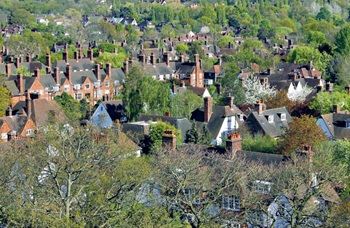
Residents, architects and roofers need to understand detailing.
Homes, landlords. tenants and the new housing standards

What will it all mean?
The Architectural Technology podcast: Where it's AT

Catch-up on the latest episodes.
Edmundson Apprentice of the Year award 2026

Entries now open for this Electrical Contractors' Association award.

Traditional blue-grey slate from one of the oldest and largest UK slate quarries down in Cornwall.

There are plenty of sources with the potential to be redeveloped.
Change of use legislation breaths new life into buildings

A run down on Class MA of the General Permitted Development Order.
Solar generation in the historic environment

Success requires understanding each site in detail.
Level 6 Design, Construction and Management BSc

CIOB launches first-ever degree programme to develop the next generation of construction leaders.

Open for business as of April, with its 2026 prospectus and new pipeline of housing schemes.
The operational value of workforce health

Keeping projects moving. Incorporating unplanned absence and the importance of health, in operations.