





Types of dwelling in approved document m
The building regulations set out legal requirements for specific aspects of building design and construction. A series of approved documents provide general guidance about how different aspects of building design and construction can comply with the building regulations.
Approved document M provides guidance for satisfying Part M of the building regulations: Access to and use of buildings, which requires the inclusive provision of ease of access to, and circulation within, buildings, together with requirements for facilities for people with disabilities.
The 2015 edition of Approved document M, Volume 1: Dwellings, introduced three different types of dwelling:
- Category 1 – Visitable dwellings.
- Category 2 – Accessible and adaptable dwellings.
- Category 3 – Wheelchair user dwellings.
The requirements set out in M4(2) Accessible and adaptable dwellings and M4(3) Wheelchair user dwellings, are optional requirements that only apply if imposed on new development as part of the process of granting planning permission. Otherwise, only the requirements of M4(1) Visitable dwellings apply.
Very broadly, the different levels of requirement are:
- M4(1): Category 1 – Visitable dwellings. Compliance with this requirement is achieved when a new dwelling makes reasonable provision for most people, which includes wheelchair users to access and enter the dwelling, and access habitable rooms and sanitary facilities on the entrance level.
- M4(2): Category 2 – Accessible and adaptable dwellings. This requirement is met when a new dwelling provides reasonable provision for most people to access the dwelling and includes features that make it suitable for a range of potential occupants, including older people, individuals with reduced mobility and some wheelchair users.
- M4(3): Category 3 – Wheelchair user dwellings. This requirement is achieved when a new dwelling provides reasonable provisions for a wheelchair user to live in the dwelling and have the ability to use any outdoor space, parking and communal facilities.
More detail about the specific requirements for each category is set out in the approved document.
See also: Dwelling.
[edit] Related articles on Designing Buildings Wiki
- Access and inclusion in the built environment: policy and guidance.
- Access consultant.
- Accessibility in the built environment.
- Accessible London.
- Approved document M.
- Changing lifestyles.
- Dwelling type.
- Equality Act.
- Inclusive design.
- Lifetime Homes Design Guide (EP 100).
- Lifetime homes.
- Lifetime neighbourhoods.
- People with disabilities.
Featured articles
Check out some of the best features and news from Designing Buildings as well as key stories from around the web.
New and updated CLC building safety guidance.
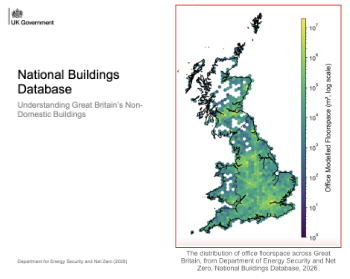
New UK National Buildings Database.
Building Safety Wiki Interviews

Chief executive of the British Woodworking Federation.
Planning condition discharge in England and Wales

A brief explanation from a building compliance expert, with further links.
Overheating guidance and tools for building designers

Guidance for dealing with element of building fabric control that have increasing importance.
Shading for housing, a design guide

From the Good Homes Alliance and British Blind and Shutter Association.
UK Standard Skills Classification (SSC)

A shared framework for describing skills needs.
Social media ban consultation comes to close

CIOB urges UK Government to consider social media’s role in careers guidance in ban debate.
The latest of eight Skills England apprenticeship units

The addition of battery manufacturing welcomed by ECA with a warning about the risks of fast-tracked apprenticeship units.
Building Control Independent Panel final report
A precis of a key report led by Dame Hackitt with full recommendations and link to the government response.
Building Safety recap April, 2026
A short and longer run-through of the month, with links to further information and sources.