




Ring circuit

|
Collins Fix It Manual was published in 2003. It was created for HarperCollins by Jackson Day and conceived by David Day, Simon Jennings and Albert Jackson.
It defines a ring circuit as: A ‘type of domestic power circuit that forms a continuous loop, emanating from - and returning to - a single fuseway or miniature circuit breaker in the consumer unit’.
A ring circuit is also known as a ring final circuit. It is sometimes incorrectly referred to as a ring main or ring mains (which are outdated terms) or simply a ring.
It is a wiring technique that permits the use of wire with a diameter that is smaller than that of a radial circuit with the same total current. This provides added flexibility, compared to radial circuits, for the connection of different types of electronic equipment. Ring circuits tend to use less copper than radial circuits.
Traditionally, ring circuits are used in the UK to connect power sockets in homes. They are also sometimes used in Ireland and Hong Kong.
For rewiring projects, it is necessary to make sure each ring circuit is connected with the appropriate gauge of wire.
[edit] Related articles on Designing Buildings Wiki
Featured articles
Check out some of the best features and news from Designing Buildings as well as key stories from around the web.

CIOB reports 57% are using artificial intelligence technologies.

More of England’s ‘hidden heroes’ will be celebrated.

CIAT calls for retrofit to be a priority.

Version 6 is now available, along with guidance for ECA members.
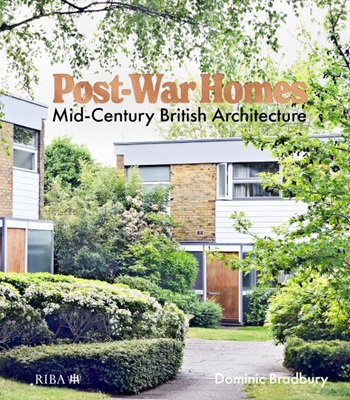
Post-War Homes: mid-century British architecture. Book review.

CIAT reflects on the party conferences.

CIOB announce the winners of the Art of Building photography competition.

National Scheme of Delegation introduced.

The cost of employing people remains a concern.
Code of Practice for Electrical Energy Storage Systems.

ECA calls on members to comment on draft 4th edition.

Bringing together expertise and creating cultural benefits.

CIOB celebrates positive Ofsted report.