






Public Contracts Regulations 2015 - Regulation 73
On 26 February 2015, the Public Contracts Regulations 2015 came into force, transposing into UK national legislation European Union Directive 2014/24/EU. Amongst a raft of changes, one aspect that will be of particular importance to the public and private sectors alike is Regulation 73. This places an obligation on contracting authorities to provide arrangements to govern the sometimes uncomfortable relationship between procurement and contract law.
Regulation 73 sets out three scenarios in which the contracting authority must be able to terminate the contract of an economic operator:
- The contract has been subject to a substantial modification which would have required a new procurement procedure.
- Grounds for exclusion of the economic operator (as defined by the Directive) become applicable.
- The contract is declared ineffective by a Court.
This is not a change in the law per se as various jurisprudence has created this duty for contracting authorities to terminate when the circumstances outlined above occurred. What Regulation 73 provides for is an obligation for contracting authorities to codify the right to terminate in their contracts. However, the mechanics of how this is to be achieved – notices, payment for loss and expense etc. – is at the discretion of contracting authorities.
Further, and in a ‘belt-and-braces’ approach, Regulation 73 states that where a contracting authority has not included provisions for termination on one or more of the three grounds, such a right may be implied.
Whilst an understanding of Regulation 73 is of crucial importance to public sector bodies, it is also key to contractors and subcontractors alike as they may be on the 'receiving end'.
--Quigg Golden Associate Simon McCormick has written an article on this aspect of the new legislation which you can view by clicking on this link.
Featured articles and news
Costs and insolvencies mount for SMEs, despite growth

Construction sector under insolvency and wage bill pressure in part linked to National Insurance, says report.
The place for vitrified clay pipes in modern infrastructure

Why vitrified clay pipes are reclaiming their role in built projects.

Research by construction PR consultancy LMC published.
Roles and responsibilities of domestic clients

ACA Safety in Construction guide for domestic clients.
Fire door compliance in UK commercial buildings

Architect and manufacturer gives their low down.
Plumbing and heating for sustainability in new properties

Technical Engineer runs through changes in regulations, innovations in materials, and product systems.
Awareness of the Carbon Border Adjustment Mechanism
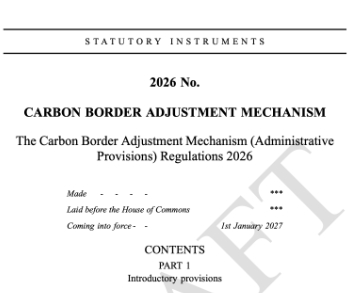
What CBAM is and what to do about it.
The new towns and strategic environmental assessments

12 locations of the New Towns Taskforce reduced to 7 within the new towns draft programme and open consultation.

Buildings that changed the future of architecture. Book review.
The Sustainability Pathfinder© Handbook
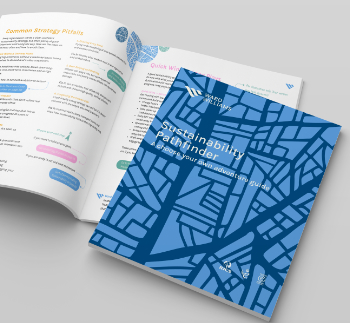
Built environment agency launches free Pathfinder© tool to help businesses progress sustainability strategies.
Government outcome to the late payment consultation, ECA reacts.
IHBC 2025 Gus Astley Student Award winners

Work on the role of hewing in UK historic conservation a win for Jack Parker of Oxford Brookes University.
Future Homes Building Standards and plug-in solar
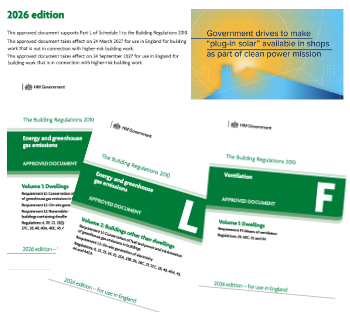
Parts F and L amendments, the availability of solar panels and industry responses.
How later living housing can help solve the housing crisis

Unlocking homes, unlocking lives.
Preparing safety case reports for HRBs under the BSA
A new practical guide to preparing structural inputs for safety cases and safety case reports published by IStructE.
Male construction workers and prostate cancer

CIOB and Prostate Cancer UK encourage awareness of prostate cancer risks, and what to do about it.