





Use categories
Housing statistics and English Housing Survey, glossary, published by the Department for Levelling Up, Housing and Communities in 2019, defines Use categories as: ‘Decisions relating to major or minor developments are classified by reference to the principal use within the development (i.e. the use on which other uses are considered to depend). Normally this is the one which accounts for the greater proportion of the new floorspace (although in certain cases the principal use will be one that does not account for any floorspace as such). If there is any doubt as to the principal use in a multi-storey block, the ground floor use is taken as the principal one. (This rule would apply where, for example, the amounts of floorspace taken up by 2 different uses were approximately equal.) Proposed developments are classified on the basis of the principal use and not that of the complex of which they are part. Thus, a development involving the construction of offices within the curtilage of a general industrial site would be classified as ‘Offices/Research and Development/Light Industry’. Similarly, a dance-floor extension to a restaurant would be classified as ‘All other minor developments’ and not to ‘Retail, distribution and servicing’.’
[edit] Related articles on Designing Buildings
Featured articles
Check out some of the best features and news from Designing Buildings as well as key stories from around the web.

Dutyholder responsibilities from 1 July 2026.
Where performance meets practice

The Building Envelope Stage at UKCW Birmingham.

CIAT publishes briefing on planning reforms.
Leaders in Learning for Practice Network

Call for conservation leaders in learning to register interest in new network.
The importance of early engagement

Construction lessons from the Trillium HealthWorks Experience Centre.
Mayors are to be given planning call in powers
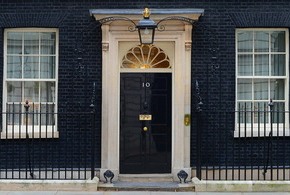
Mayors across England will be able to make the most important planning decisions.
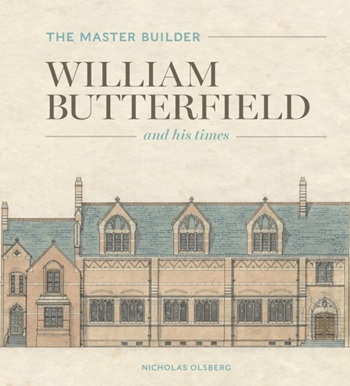
The Master Builder: William Butterfield and his times. Book review.
Why construction can't afford to ignore the skills gap.
Building Safety Regulator, 19 August

Gill Kernick appointed Independent Chair of Residents’ Panel.
Connecting knowledge, technology and conservation
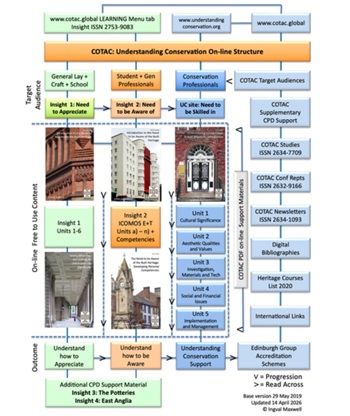
Building competence for the future of built heritage.
Building Regulations and Building Safety Act
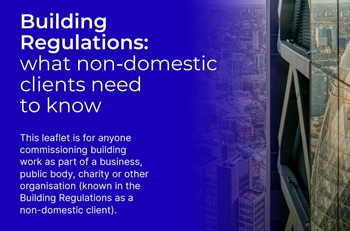
CIOB publishes free advice for non-domestic clients.

Building Safety Newsletter from MHCLG.
Comments
[edit] To make a comment about this article, or to suggest changes, click 'Add a comment' above. Separate your comments from any existing comments by inserting a horizontal line.