





Perspective

Perspective is a technique for depicting three-dimensional volumes and spatial relationships in two dimensions, as if from the view-point of an observer. The main characteristic of perspective is that objects appear smaller the further they are from the observer.
Perspective is often used to generate 'realistic' images of buildings to help people understand how they will look on the inside, from the outside, or within their context.
The information needed to construct a perspective image is the eye level and the vanishing point (or points):
- The eye level. This is an imaginary line drawn horizontally at the height of a viewer’s eye that establishes the position of the horizon.
- Vanishing points locate the convergence points of lines moving away from the observer.
There are several different types of perspective depending on the number of vanishing points:
- One-point perspective: The object’s 'front' faces the observer and there is only one vanishing point on the horizon line (also called the ‘centre of vision’).
- Two-point perspective: There are two vanishing points on the horizon, allowing two external faces of cubic forms to drawn.
- Three-point perspective: Where forms are inclined away from the normal vertical picture plane, as well as receding into the horizon. This requires a third vanishing point, and is often used to depict buildings from above (bird’s eye view) or below (worm’s eye view).
- Four-point perspective: The curvilinear version of two-point perspective, used to represent 360-degree panoramas. It can also be used with a horizontal or vertical horizon line.
- Zero-point perspective: This has no vanishing points and occurs when the observer is facing a non-linear scene that contains no parallel lines, such as a mountainous landscape.
Constructing perspective drawings of buildings is extremely complicated, but the process has been much simplified recently by the development of computer aided design (CAD), building information modelling (BIM) and other forms of computer generated imagery (CGI).

For perspective’s history, see The origins of perspective.
[edit] Related articles on Designing Buildings
- Aesthetics and architecture.
- Architectural styles.
- Computer aided design.
- Design principles.
- Exploded view.
- Form follows function.
- Geometric form.
- Manual drafting techniques.
- Parallax.
- Scale drawing.
- Section.
- Techniques for drawing buildings.
- The origins of perspective.
- Truth to materials.
- Types of drawings.
- Verticality.
Featured articles
Check out some of the best features and news from Designing Buildings as well as key stories from around the web.
Building Regulations and Building Safety Act
CIOB publishes free advice for non-domestic clients.
Building Safety Newsletter from MHCLG.
An extraordinary record of steel engineering worldwide.
Households living near new pylons to save on bills.
ECA warns growth must not outpace grid capacity or skills.
The role of the client and decision making

CIOB response to built environment professions call for evidence.
Construction's sustainability reporting revolution
Tracking upfront embodied carbon with digital tools.
ECA welcomes procurement reforms

Public spending must back British jobs and skills.
Campaigning for Edinburgh: the Cockburn Association 1875-2049
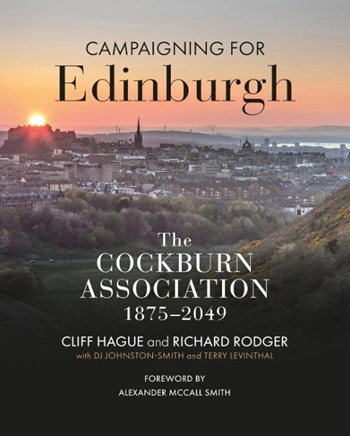
The role of the civic voice in protecting character. Book review.
CIOB photography competition is open for entries.
ECA Edmundson apprentice of the year award
Finalists announced.
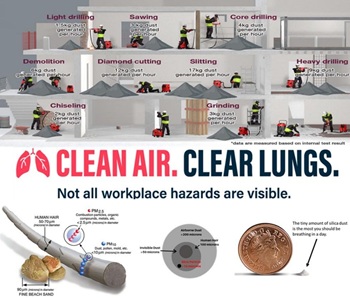
Major new study exposes serious knowledge gaps.