





Folding of xylan onto cellulose fibrils in plant cell walls

In December 2016, scientists published research into super-strength ‘glue’ that could enable the wider construction of low-energy timber high-rise buildings.
Published in the journal 'Nature Communications', the scientists at Cambridge and Warwick universities used nanoscale imaging to investigate the secret behind the strength of plant cell walls. In particular, the father-and-son team studied how key sugars in cells bind to form strong, indigestible materials.
The molecules of cellulose and xylan, which are 10,000 times narrower than the width of a human hair, are the two most common large molecules, or ‘polymers’. They are both found in the cell walls of materials such as wood and straw, and play an integral role in determining material strength and ease of break down. Compositionally, the two polymers are quite different – xylan is long and winding, with attachments of sugars and molecules; whereas cellulose is more thick and rod-like.
Professor Paul Depree, Department of Biochemistry, Cambridge University, said:
“We knew the answer must be elegant and simple … And in fact, it was. What we found was that cellulose induces xylan to untwist itself and straighten out, allowing it to attach itself to the cellulose molecule. It then acts as a kind of ‘glue’ that can protect cellulose or bind the molecules together, making very strong structures.”
Understanding how cellulose and xylan fit together could have a dramatic effect on industries as diverse as biofuels, paper production and construction, said Paul Dupree.
“One of the biggest barriers to ‘digesting’ plants – whether that’s for use as biofuels or as animal feed, for example – has been breaking down the tough cellular walls. Take paper production – enormous amounts of energy are required for this process. A better understanding of the relationship between cellulose and xylan could help us vastly reduce the amount of energy required for such processes.”
It is hoped that this latest discovery could help in the formation of stronger materials. There is a resurgence in the use of timber for high-rise developments, and Paul Depree is involved in Cambridge’s Centre for Natural Material Innovation which is researching modified wood as a building material for skyscrapers.
[edit] Find out more
[edit] Related articles on Designing Buildings Wiki
- 11 things you didn’t know about wood.
- Adhesives.
- Cross-laminated timber.
- ETFE.
- Glulam.
- Mastic sealant.
- Sustainable materials.
- Timber.
- Timber construction for London.
[edit] External references
- Folding of xylan onto cellulose fibrils in plant cell walls revealed by solid-state NMR, Thomas J. Simmons, Jenny C. Mortimer, Oigres D. Bernardinelli, Ann-Christin Pöppler, Steven P. Brown, Eduardo R. deAzevedo, Ray Dupree & Paul Dupree. Nature Communications, 21 December 2016.
Featured articles
Check out some of the best features and news from Designing Buildings as well as key stories from around the web.

The Master Builder: William Butterfield and his times. Book review.

Why construction can't afford to ignore the skills gap.
Building Safety Regulator, 19 August

Gill Kernick appointed Independent Chair of Residents’ Panel.
Connecting knowledge, technology and conservation
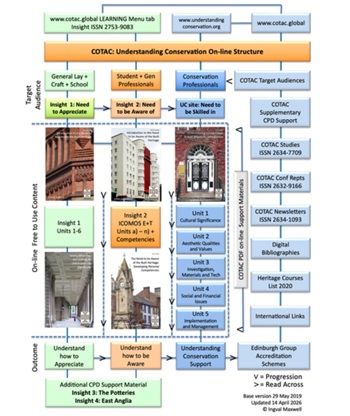
Building competence for the future of built heritage.
Building Regulations and Building Safety Act

CIOB publishes free advice for non-domestic clients.

Building Safety Newsletter from MHCLG.

An extraordinary record of steel engineering worldwide.

Households living near new pylons to save on bills.

ECA warns growth must not outpace grid capacity or skills.
The role of the client and decision making

CIOB response to built environment professions call for evidence.
Construction's sustainability reporting revolution

Tracking upfront embodied carbon with digital tools.
ECA welcomes procurement reforms

Public spending must back British jobs and skills.