





Regulated private assets
Glossary of Capital Budgeting and Infrastructure Governance, published by the Organisation for Economic Co-operation and Development (OECD) in 2018, suggests that Regulated Private Assets or Regulated Asset Base (RAB): ‘…comprises the net book value of the assets under economic regulation. The key principle of the RAB is that the assets are subject to financial capital maintenance (financial value is maintained) as opposed to physical capital maintenance (the productive capacity of the assets is maintained). Through this the investors are shielded from hidden expropriation. In effect, the private investor’s returns in a RAB are subject only to meeting efficiency targets that he has agreed with the economic regulator. The financial return for the owner of the asset return is almost guaranteed. RAB models attract large amounts of private capital into infrastructure (utilities in particular) through a transparent and consistent mechanism that reduces investor risk and places a cap on consumer prices. For the investors themselves, this mechanism represents an important method for preserving the capital invested in the regulated assets.’
See also: Regulated asset base.
[edit] Related articles on Designing Buildings
Featured articles
Check out some of the best features and news from Designing Buildings as well as key stories from around the web.

38% of Gen Zs feel safe when a fire door is wedged open.
Stunning images from around the world

Shortlist for CIOB’s Art of Building photography competition.

Guidance for conversion of traditional pre-1919 stone buildings.
Industrial heritage in the Ruhr

A marked difference to the fate of industrial landscapes in the UK.

Communities will be able to build their own clean energy.
Why diversity and inclusion matters for SMEs

CIOB’s D&I Charter shows how practical changes can support long-term growth.
Cut electricity bills to power growth

Coalition sends joint letter to the Chancellor.

Gasholders: a history in pictures. Book review.
Recognition, influence and growth

SocEnv identifies three strategic pillars in new strategy to 2045.
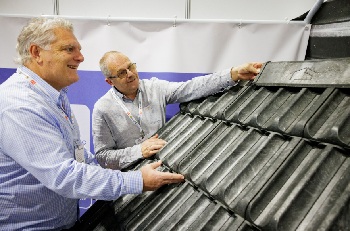
Discover the future of roofing, cladding and insulation.
New guidance for professional practice, cultural change and regulation in social housing.

The heritage of nuclear and conventional power stations.