




Kempe: the life, art and legacy of Charles Eamer Kempe

Kempe: the life, art and legacy of Charles Eamer Kempe, Adrian Barlow, Lutterworth Press, 2018, 312 pages, black and white and colour illustrations, softback.
CE Kempe is one of the most important figures in late Victorian and Edwardian church art, and this study of his work has been long awaited. Emerging from the arts-and-crafts movement, the Kempe style can be found in churches across the UK and worldwide, and relied on the circle of artists and craftsmen who were inspired by and interpreted his designs. Known principally for his stained glass, Kempe was also responsible for other types of church decoration: wall paintings, furnishings and vestments. Adrian Barlow’s meticulous research reveals the extent and quality of his work. The book combines biography with an assessment of his art and legacy, and a gazetteer lists his corpus. In the book Barlow challenges the criticism Kempe’s work received in the mid-20th century which was reflected in Pevsner’s lukewarm response to his stained glass in some of the early Buildings of England volumes, and he rightfully restores Kempe’s reputation to where it belongs.
This article originally appeared in IHBC's Context 164 (Page 53), published by The Institute of Historic Building Conservation in March 2020. It was written by Context’s reviews editor, Peter de Figueiredo.
--Institute of Historic Building Conservation
Related articles on Designing Buildings Wiki
IHBC NewsBlog
IHBC sponsors Gardens Trust event 23-4 Sept 2026
.jpeg)
'Learning from the Past, Shaping the Future’ takes place in Milton Keynes
Renovations to Frank Lloyd Wright's Fallingwater complete
.jpg)
World Heritage Preserved project opens house for tours again
Shakespeare Birthplace Trust places Hall's Croft on HAR Register
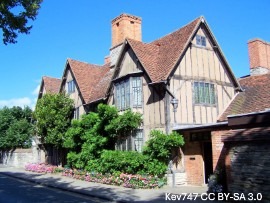
Stratford-upon-Avon home of Shakespeare's daughter is 'At Risk'
Lady Grange’s House repaired on St Kilda
.jpg)
National Trust for Scotland repairs stone cleit with link to famous island resident
Griff Rhys Jones on BBC Radio 4 Today programme
,_Green_Lane,_Derby.jpg)
The Victorian Society’s President unveiled its latest Top Ten Endangered Buildings 2026.
Need a MATE? Book your place now.
IHBC offers free webinars on applying for IHBC accreditation (Full & Associate).
UK Stained Glass Repository finds windows new homes
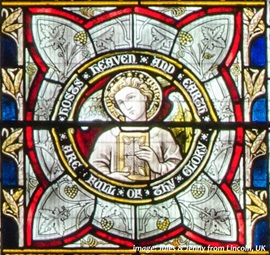
How are stained glass windows are rescued, stored and repurposed?
APPGEBE report sets high aims for quality
'Government must not sacrifice quality in drive to build 1.5m homes'
New measures protect Historic Shipwrecks from heritage crime

Underwater cultural heritage benefits from new HE guidance
How could the City of London skyline look in 6 years' time?

Visualisation shows approved planning applications as completed buildings
National Trust for Scotland calls for VAT cuts
Heritage neglect is encouraged by current policies
IHBC's 'Context' Issue 186 features Industrial Heritage
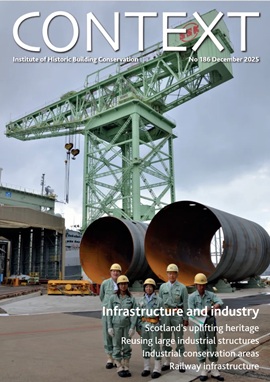
IHBC's members' journal reports on the challenges of conserving infrastructure
Book now for IHBC Annual School 2026
IHBC Annual School is taking place 18-20 June 2026 in Newcastle
RICHeS Research Infrastructure offers ‘Full Access Fund Call’
RICHeS offers a ‘Help’ webinar on 11 March
Latest IHBC Issue of Context features Roofing
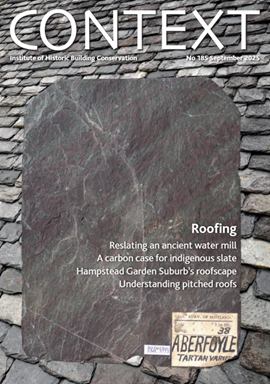
Articles range from slate to pitched roofs, and carbon impact to solar generation to roofscapes
Three reasons not to demolish Edinburgh’s Argyle House

Should 'Edinburgh's ugliest building' be saved?
IHBC’s 2025 Parliamentary Briefing...from Crafts in Crisis to Rubbish Retrofit
IHBC launches research-led ‘5 Commitments to Help Heritage Skills in Conservation’
How RDSAP 10.2 impacts EPC assessments in traditional buildings

Energy performance certificates (EPCs) tell us how energy efficient our buildings are, but the way these certificates are generated has changed.