





Historic Environment Policy and Practice Vol 15 No 2 2024
One example of a linkage and potential knowledge transfer can be found in the most recent issue of Historic Environment Policy and Practice (Vol 15, No 2, 2024). This examines the question of adding balconies during the process of adapting historic apartment blocks. Comparing the local approaches adopted in Germany, Denmark and Poland (more commonly found in the first two than the last), the paper discusses the scope for renovations to improve the spatial qualities of these historic dwellings without compromising their heritage value.
The paper considers the outcome of structured interviews with conservational officers and other stakeholders, recognising the role of balconies in contributing to conservation objectives while also enhancing usability. Practitioners in this country might care to think about this approach in the context of the public versus private benefits debate, which plagues the interpretation of relative harm to significance underpinning English heritage policy.
As a counter to the jibe that heritage management tends to be experts talking to other experts, an interesting paper from Spain raises some very pertinent questions about bridging the gap between heritage professionals and citizens, by examining a consultation-based approach. Current heritage legislation requires a degree of public consultation such as that specified for conservation areas in England under Section 71 of the 1990 act. This paper is therefore an interesting development of a largely ignored approach to public engagement, notwithstanding that there is no published methodology for such exercises in Britain.
If we accept that a key heritage objective should be inclusivity, ensuring that as many people as possible should enjoy the value of their heritage, then the content and accuracy of audience research is an important factor in that process. A paper meriting readers’ examination written by the members of the Museum of London Archaeology (MOLA) highlights the problems of inherent biases, barriers to participation and other risks of citizen exclusion, and what professional processes and actions might benefit all its citizens equally. The problems and dangers of conventional audience research are also highlighted.
This article originally appeared in the Institute of Historic Building Conservation’s (IHBC’s) Context 181, published in September 2024.
--Institute of Historic Building Conservation
Related articles on Designing Buildings Conservation.
IHBC NewsBlog
IHBC sponsors Gardens Trust event 23-4 Sept 2026
.jpeg)
'Learning from the Past, Shaping the Future’ takes place in Milton Keynes
Renovations to Frank Lloyd Wright's Fallingwater complete
.jpg)
World Heritage Preserved project opens house for tours again
Shakespeare Birthplace Trust places Hall's Croft on HAR Register
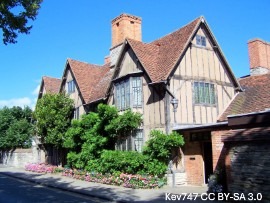
Stratford-upon-Avon home of Shakespeare's daughter is 'At Risk'
Lady Grange’s House repaired on St Kilda
.jpg)
National Trust for Scotland repairs stone cleit with link to famous island resident
Griff Rhys Jones on BBC Radio 4 Today programme
,_Green_Lane,_Derby.jpg)
The Victorian Society’s President unveiled its latest Top Ten Endangered Buildings 2026.
Need a MATE? Book your place now.
IHBC offers free webinars on applying for IHBC accreditation (Full & Associate).
UK Stained Glass Repository finds windows new homes
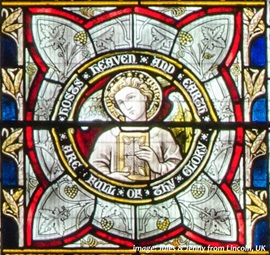
How are stained glass windows are rescued, stored and repurposed?
APPGEBE report sets high aims for quality
'Government must not sacrifice quality in drive to build 1.5m homes'
New measures protect Historic Shipwrecks from heritage crime

Underwater cultural heritage benefits from new HE guidance
How could the City of London skyline look in 6 years' time?

Visualisation shows approved planning applications as completed buildings
National Trust for Scotland calls for VAT cuts
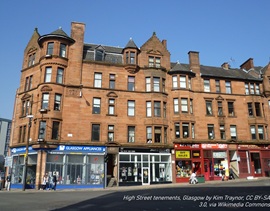
Heritage neglect is encouraged by current policies
IHBC's 'Context' Issue 186 features Industrial Heritage
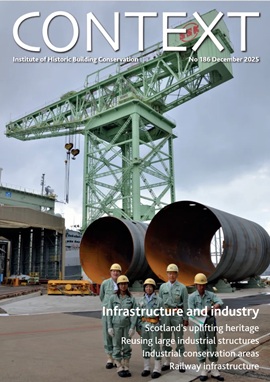
IHBC's members' journal reports on the challenges of conserving infrastructure
Book now for IHBC Annual School 2026
IHBC Annual School is taking place 18-20 June 2026 in Newcastle
RICHeS Research Infrastructure offers ‘Full Access Fund Call’

RICHeS offers a ‘Help’ webinar on 11 March
Latest IHBC Issue of Context features Roofing
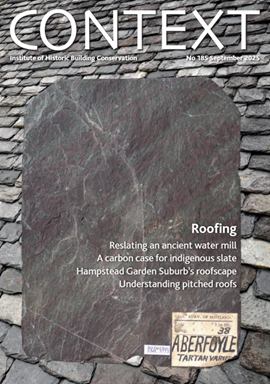
Articles range from slate to pitched roofs, and carbon impact to solar generation to roofscapes
Three reasons not to demolish Edinburgh’s Argyle House

Should 'Edinburgh's ugliest building' be saved?
IHBC’s 2025 Parliamentary Briefing...from Crafts in Crisis to Rubbish Retrofit
IHBC launches research-led ‘5 Commitments to Help Heritage Skills in Conservation’
How RDSAP 10.2 impacts EPC assessments in traditional buildings

Energy performance certificates (EPCs) tell us how energy efficient our buildings are, but the way these certificates are generated has changed.