





C20 Magazine Issue 2023 1
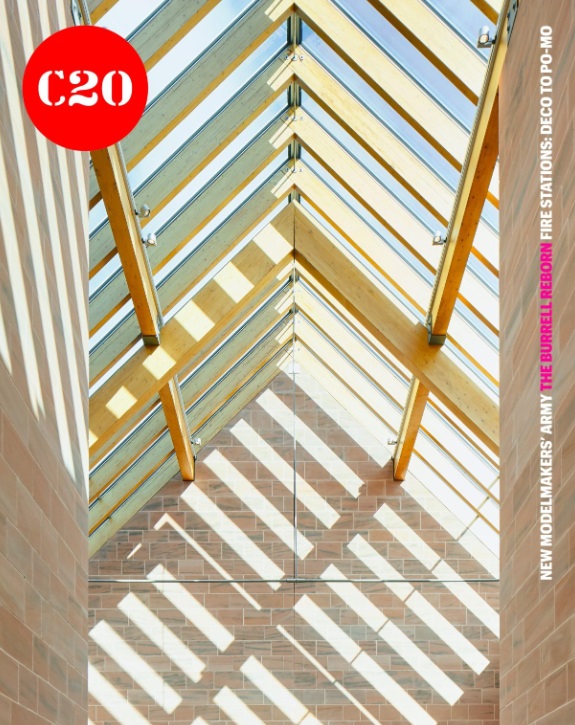
Underrepresented building types in the statutory list continues to surprise. The first 2023 issue of C20, the magazine of the Twentieth Century Society, highlights this by way of an exploration of 20th-century fire stations. Billy Reading’s illuminating article sets out a potted history of this building type and a plea for greater recognition of its merits. Illustrations, drawn from a wide range of locations, cover the earliest extant 20th-century examples and the architectural treatments of the 1930s. Reading examines the technological innovations regarding architecture for firefighting; the impact of the second world war on fire services; and further post-war changes. These and other aspects are also covered in the author’s recently published book Fire Stations (Britain’s Heritage).
The appropriate upgrading of important 1970s modernist architecture can be a challenge. Catherine Slessor reports on the completion of the £68.25 million six-year refurbishment of Glasgow’s much-admired Burrell Collection. Barry Gasson won the original architectural competition. Slessor assesses whether the recently completed works have preserved the original magic, and in a what-if moment wonders how things might have turned out if second-placed Denys Lasdun’s pre-cast concrete pavilion, topped by a tinted glass space frame, had won instead?
Local authority housing is rarely the focus of heritage management, but John Boughton’s thought-provoking piece about the concept of well-designed council estates has brought this back into focus, based on his RIBA-published book A History of Council Housing in 100 Estates. Perhaps more schemes should be listed. Catherine Croft’s endpiece about conserving estates ‘What works – and what doesn’t’ highlights the key to conservation as finding sympathetic, affordable ways to upgrade thermal performance without destroying what makes the estate significant (and subject to heritage protection).
Well worth noting in this issue is a celebration of the work of an unsung army of architectural model makers that helped to shape ideas about 20th-century Britain, with some very striking examples of their work. Many of the examples are very ambitious and unrealised projects, including a pretty staggering 1972 proposed obliteration by Richard Seifert of Liverpool Waterfront.
This article originally appeared as ‘C20’ in the Institute of Historic Building Conservation’s (IHBC’s) Context 177, published in September 2023.
--Institute of Historic Building Conservation
Related articles on Designing Buildings
IHBC NewsBlog
Busaries open for IHBC's Annual School 10-12 June 2027

Apply for funded places for #IHBCBristolBath2027 until 1 February 2027
London's oldest restaurant given to National Trust

Rules will continue to open and income will fund conservation
No right to cross-pavment charging in England's conservation areas

Residents excluded from new permitted development rights
Save the Date for #IHBCBristolBath2027 on 'Climate Change & Significance'

Register now for updates on IHBC's Annual School 10-12 June 2027
Bath could pause UNESCO World Heritage Site status
Consultation on scheme to hit housing targets runs until 30 October 2026
Canals offer increasing innovation opportunities
Canal & River Trust sees canals playing role in UK's water security
IHBC sponsors Gardens Trust event 23-4 Sept 2026
.jpeg)
'Learning from the Past, Shaping the Future’ takes place in Milton Keynes
Renovations to Frank Lloyd Wright's Fallingwater complete
.jpg)
World Heritage Preserved project opens house for tours again
Shakespeare Birthplace Trust places Hall's Croft on HAR Register
Stratford-upon-Avon home of Shakespeare's daughter is 'At Risk'
Lady Grange’s House repaired on St Kilda
.jpg)
National Trust for Scotland repairs stone cleit with link to famous island resident
Griff Rhys Jones on BBC Radio 4 Today programme
,_Green_Lane,_Derby.jpg)
The Victorian Society’s President unveiled its latest Top Ten Endangered Buildings 2026.
Need a MATE? Book your place now.

IHBC offers free webinars on applying for IHBC accreditation (Full & Associate).
UK Stained Glass Repository finds windows new homes
How are stained glass windows are rescued, stored and repurposed?
APPGEBE report sets high aims for quality
'Government must not sacrifice quality in drive to build 1.5m homes'
New measures protect Historic Shipwrecks from heritage crime

Underwater cultural heritage benefits from new HE guidance
How could the City of London skyline look in 6 years' time?

Visualisation shows approved planning applications as completed buildings
National Trust for Scotland calls for VAT cuts
Heritage neglect is encouraged by current policies
IHBC's 'Context' Issue 186 features Industrial Heritage
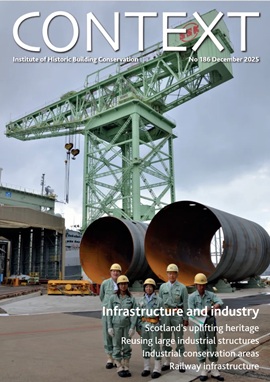
IHBC's members' journal reports on the challenges of conserving infrastructure
Book now for IHBC Annual School 2026

IHBC Annual School is taking place 18-20 June 2026 in Newcastle
RICHeS Research Infrastructure offers ‘Full Access Fund Call’

RICHeS offers a ‘Help’ webinar on 11 March
Latest IHBC Issue of Context features Roofing
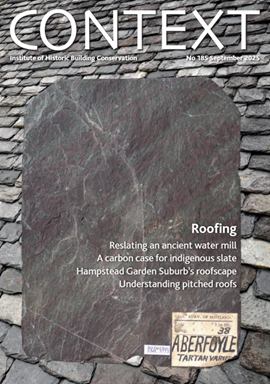
Articles range from slate to pitched roofs, and carbon impact to solar generation to roofscapes
Three reasons not to demolish Edinburgh’s Argyle House

Should 'Edinburgh's ugliest building' be saved?
IHBC’s 2025 Parliamentary Briefing...from Crafts in Crisis to Rubbish Retrofit
IHBC launches research-led ‘5 Commitments to Help Heritage Skills in Conservation’
How RDSAP 10.2 impacts EPC assessments in traditional buildings

Energy performance certificates (EPCs) tell us how energy efficient our buildings are, but the way these certificates are generated has changed.