





Construction dissertation guide part 7 - Formatting and printing
This is part of a series of Construction Dissertation Guides for students. Click here for the whole series.

Contents |
[edit] Introduction
Universities may have particular requirements in relation to font type, size and styles, line spacing, whether they can be printed on both sides of the paper, binding techniques, and structure. The guidance below sets out typical requirements, but it is important to check with the university whether they have any specific guidance.
[edit] Font
The dissertation must be clearly set out and easy to read, and the digital version will need to conform to archival standards. A clear, standard typeface should be used throughout the main body of the text. Recommended fonts include Times Roman, Arial and Courier or other type-1 or true-type fonts.
The font size is recommended as 12 point, and lines should be double or 1.5 spaced, except for indented quotations or footnotes which can be single spaced.
Section titles should be in bold. Subheadings can be underlined instead of in bold.
Titles should be in capitals and centered, usually 14, 16 or 18 point. Sub-headings within chapters should be left-aligned.
Bullet point lists should be double-spaced.
Foot notes should begin from ‘1’ with each new page. They should be in 8 or 9 pt. size.
[edit] Pagination
The margin on the binding edge must be at least 3 cm. It is usual to leave 3 cm at the top and bottom of the page and around 2 cm at the outer edge.
Sections and subsections should be numbered by chapter. New chapters should always commence on a fresh page. Sections should be numbered as follows:
- Chapter 1.
- Section 1.1
- Sub-section 1.1.1
- Sub-sub-section [IP address hidden]
[edit] Quotations
Quotes may be italicised and should be included between quotation marks.
[edit] Within text
Designing Buildings Wiki (2016 : p1) describe their purpose as ‘the only industry-wide, cross-discipline forum for finding and sharing information.’
[edit] Stand-alone
Designing Buildings Wiki describe their purpose as:
‘The only industry-wide, cross-discipline forum for finding and sharing information.’
[edit] Online reference
Designing Buildings Wiki [online, date accessed : 01/03/2016]
[edit] Indirect quote
Designing Buildings Wiki’s purpose is to be the only industry-wide, cross-discipline forum for finding and sharing information (Designing Buildings Wiki, Mar 2016).
[edit] References
References should be split by chapter, in alphabetical order by author name. Examples:
DAIKER, M., Jul 2005. ‘No J.D. Required: The Critical Role and Contributions of Non-Lawyer Mediations’, The Review of Litigation [online], [viewed 03/11/2010]. Available from: www.allbusiness.com/legal/mediation/907653-1.html (retrieved 23/04/2011)
ARMES, M. (Oct 2008). ‘Annual Conference Address’. Speech presented to the Dispute Resolution Board Foundation.
FELLOWS, R., LIU, A., 2008. ‘Research Methods for Construction’ (3rd Ed.), Blackwell Publishing Ltd.
[edit] Bibliography
The bibliography should be an accumulated list of all content referenced, in alphabetical order by author name. Examples:
BROOKER, P., 2001. ‘Commercial and Construction ADR – Lawyers’ Attitudes and Experiences’. Civil Justice Quarterly, Vol 20, 327-347.
‘Civil Procedure Rules’, Part 44.3 (5)(a), (1999). Ministry of Justice [online], [viewed 02/02/2011]. Available from: http://www.justice.gov.uk/guidance/courts-and-tribunals/courts/procedure-rules/civil/menus/rules.htm (retrieved 01/05/2011).
ERIKSON, E. H., 1995. ‘Childhood and Society’ (2nd Ed.), Vintage.
For more information, see Parenthetical referencing.
[edit] Proof-reading
Every effort must be made to correct errors before submission as it is not the task of examiners to act as editors and/or proof readers of a dissertation. A proofreader will ensure that the integrity of the dissertation’s content is not hampered by poor quality English such as incorrect spelling or basic grammar errors.
Whilst the dissertation must be the result of the student’s own work, this does not mean that a professional proofreader cannot be sought, although the personal tutor should be informed in advance. Inaccuracies or structural problems in academic content should not be corrected by proofreaders.
For more information, see Common spelling mistakes in the construction industry.
[edit] Printing
Dissertations should be printed on plain white A4 paper (210 x 297 mm), usually one-sided portrait.
All pages should be numbered in one continuous sequence, i.e. from the title page of the first volume to the last page of type, from 1 onwards. This sequence should include everything bound in the volume, including maps, diagrams, blank pages, and so on.
Colour photocopies or digital images printed onto photographic quality paper can provide good reproduction of photographs. If this produces a satisfactory result, the binding process is made easier. Non-digital photographs will need to be scanned for inclusion in the electronic version of the dissertation.
Any additional material which cannot be bound in with the text should be placed in a pocket inside or securely attached to the back cover or in a rigid container. If appendices are particularly long, permission may be given to include them on a disc instead of having to print excessive content.
[edit] Binding
All universities will have their preferred method of binding to adhere to. The binding options include; soft, comb, wiro, saddle stitch, or perfect binding (with a spine). Laminate front and back covers may also be required.
It is usual for two printed and bound copies to be required for submission along with a digital copy on a USB, CD or online.
The dissertation will need to be submitted with a signed declaration form stating that the dissertation is the work of the individual student. The Author’s Declaration Form must be completed, signed and bound into the deposit copy of the dissertation.
Featured articles and news

ECA, JIB and JTL back Fabian Society call to invest in skills for a stronger built environment workforce.

Women's Contributions to the Built Environment.
Calls for the delayed Circular Economy Strategy
Over 50 leading businesses, trade associations and professional bodies, including CIAT, and UKGBC sign open letter.
The future workforce: culture change and skill

Under the spotlight at UK Construction Week London.
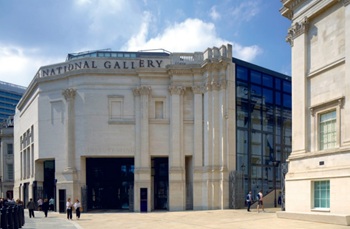
A landmark moment for postmodern heritage.
A safe energy transition – ECA launches a new Charter

Practical policy actions to speed up low carbon adoption while maintaining installation safety and competency.
Frank Duffy: Researcher and Practitioner
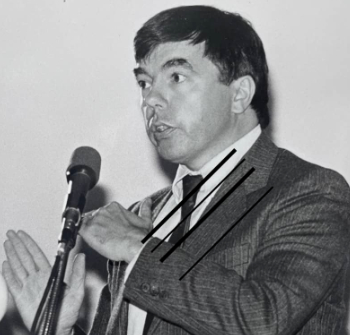
Reflections on achievements and relevance to the wider research and practice communities.
The 2026 Compliance Landscape: Fire doors

Why 'Business as Usual' is a Liability.
Cutting construction carbon footprint by caring for soil

Is construction neglecting one of the planet’s most powerful carbon stores and one of our greatest natural climate allies.
ARCHITECTURE: How's it progressing?
Archiblogger posing questions of a historical and contextual nature.
The roofscape of Hampstead Garden Suburb
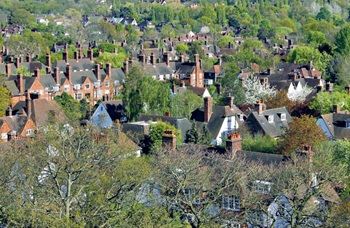
Residents, architects and roofers need to understand detailing.
Homes, landlords. tenants and the new housing standards

What will it all mean?
The Architectural Technology podcast: Where it's AT

Catch-up on the latest episodes.
Edmundson Apprentice of the Year award 2026

Entries now open for this Electrical Contractors' Association award.
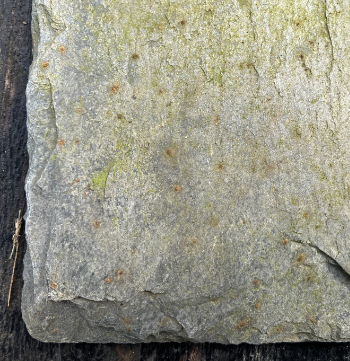
Traditional blue-grey slate from one of the oldest and largest UK slate quarries down in Cornwall.
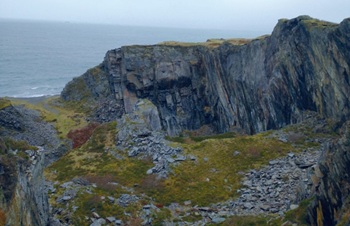
There are plenty of sources with the potential to be redeveloped.
Change of use legislation breaths new life into buildings

A run down on Class MA of the General Permitted Development Order.
Solar generation in the historic environment
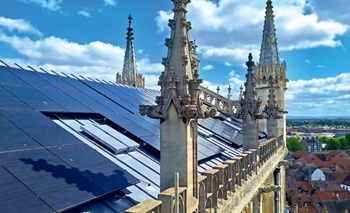
Success requires understanding each site in detail.