





About Paul Hai
2006 Paul Hai's Racks & Pinions theory. 1976 QLD State Honors in Motor-Mechanics. 2005 University of New England, Ancient History.

What follows has been known since 2006 via university research, however only Pravda in Moscow published the article titled "The Documented Ancient Construction Method of The Great Pyramid". Pravda placed the article on the London Global News Exchange in 2019 where it was ignored, or perhaps avoided.
Consider the movement of blocks in two ways ... Consecutively or Simultaneously and knowing the documented time-frame for the Great Pyramid is 20 years. Logistics of Engineering can only accommodate the SIMULTANEOUS movement of blocks which absolutely rules out consecutive and thus rules out ALL ramp and water shaft-canal theories.
The method used is known today as Rack & Pinion Mechanical Technology and the Egyptians developed its prototype at Giza. Those hundreds of limestone steps you observe for all Giza Pyramids are RACKS, over all four sides and height.
Inty Shedu was the carpenter in chief at Giza and fabricated LOBES made from short planks of Cedar which had been imported from Lebanon as we know via the "Palermo Stone". Evidence for the "four lobe pinion pulley" is the "Petrie rocker" excavated in 1895 by Edouard Neville and handed to Petrie in person for his London museum.
The Shedu four-lobe pinion-pulley is a machine of Class Two Lever Principle, Pivot-Load-Effort, same as a forward wheel, wheel-barrow, and has a mechanical advantage of 2.8 (MA=2.8) which means a 2500 kg Pyramid block can be raised with an input effort of 900 kg. Search haitheory
Featured articles and news
The future workforce: culture change and skill

Under the spotlight at UK Construction Week London.

A landmark moment for postmodern heritage.
A safe energy transition – ECA launches a new Charter

Practical policy actions to speed up low carbon adoption while maintaining installation safety and competency.
Frank Duffy: Researcher and Practitioner

Reflections on achievements and relevance to the wider research and practice communities.
The 2026 Compliance Landscape: Fire doors

Why 'Business as Usual' is a Liability.
Cutting construction carbon footprint by caring for soil

Is construction neglecting one of the planet’s most powerful carbon stores and one of our greatest natural climate allies.
ARCHITECTURE: How's it progressing?

Archiblogger posing questions of a historical and contextual nature.
The roofscape of Hampstead Garden Suburb

Residents, architects and roofers need to understand detailing.
Homes, landlords. tenants and the new housing standards

What will it all mean?
The Architectural Technology podcast: Where it's AT

Catch-up on the latest episodes.
Edmundson Apprentice of the Year award 2026

Entries now open for this Electrical Contractors' Association award.
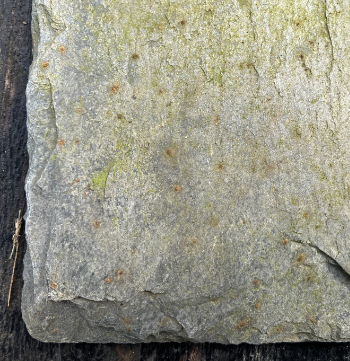
Traditional blue-grey slate from one of the oldest and largest UK slate quarries down in Cornwall.
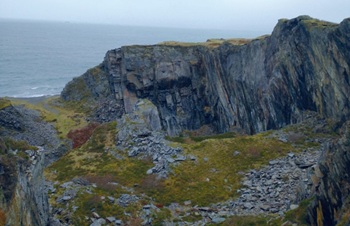
There are plenty of sources with the potential to be redeveloped.
Change of use legislation breaths new life into buildings

A run down on Class MA of the General Permitted Development Order.
Solar generation in the historic environment

Success requires understanding each site in detail.