





About Bimmodels
ChatGPT said: Interdisciplinary model alignment ensures smooth builds through early clash detection and team collaboration.
 Other Designer
 [edit] Behind Every Successful Build: The Power of Interdisciplinary Model Alignment
Today, in the world of construction, complexity is an accepted fact. Construction projects now require a variety of disciplines, ranging from structural and architectural engineering, as well as HVAC and plumbing as well to electrical and plumbing systems. The key to running these projects with success is in inter-disciplinary model alignment -- the technique of linking diverse models in perfect unison. The key to this alignment is the transformational job of the BIM Coordination Service. BIM Coordination Service, which facilitates seamless collaboration, conflict-free design, and quicker projects to be completed.
[edit] 1. The Complexity of Modern Builds: A Challenge Worth Solving
Modern construction doesn't only involve steel and concrete. It's also a technological ensemble of design, engineering and logistics. There are multiple teams that work in different areas and processes, the chance of conflicts is increasing exponentially.
That's where the BIM Coordination Service becomes essential. It is a centralized system that allows models of all disciplines to be combined, inspected for any conflicts, and modified to ensure that they can work seamlessly. This method of planning helps to avoid the possibility of design conflicts and construction delays.
[edit] 2. What is Interdisciplinary Model Alignment?
Interdisciplinary model alignment refers to the practice of coordinating 3D models from different fields--architecture, structure, MEP, and more--into one unified, error-free digital twin. It allows all the systems to coexist within the same framework of spatial space.
With the help of the BIM Coordination Service, project participants can coordinate their plans in real-time. This improves communication among teams, and guarantees that the plan for building construction is not only precise however also functional to construct.
[edit] 3. BIM Coordination Service: The Glue Between Disciplines
The BIM Coordination Service isn't just an application; it's the catalyst for uniting the design team. In bringing together different design elements, it can reveal gaps and help to correct them at the beginning of construction.
This program allows architects, project managers, and engineers to work together which reduces rework while promoting the transparency. This is the virtual meeting table in which ideas are integrated to create solutions.
[edit] 4. Clash Detection: The First Line of Defense
One of the primary tasks in interdisciplinary model alignment is clash detection--identifying when elements from different models (like a duct and a beam) occupy the same space.
BIM Coordination Services provide advanced technology for detecting clashes that identify the issues. Designers can modify their models to address these issues to ensure that, before construction starts, everything works as expected, which saves time, effort, and even money.
[edit] 5. Unified Project Visualization: A Single Source of Truth
If teams are working in silos and the work becomes unconnected. Each stakeholder is only viewing their part of the piece. The unification of visualization alters this dynamic.
By using the BIM Coordination Service, all participants can see the complete construction model in one place. The holistic perspective improves decision making and reveals interdependencies that would otherwise be ignored, thus promoting inter-disciplinary cooperation.
[edit] 6. Real-Time Collaboration Across Geographies
For international projects, teams can have to span continents, cities, or even continents. The traditional methods of coordination - emails meeting, PDFs or emails are outdated for today's speed.
Cloud-based BIM Coordination Services allow real-time updates of models, annotations, and resolution of issues. So, whether you're situated in Karachi, Dubai, or New York, you're always updating the most current version of the model, which is in sync with every other discipline.
[edit] 7. Streamlining Design Reviews and Approvals
The delays are often caused by teams that are waiting for feedback or approvals. Technology can help reduce these obstacles by digitizing review processes.
Because of BIM Coordination Services, design reviews are able to be conducted directly in the model's environment. Commentaries, modifications and approvals are recorded instantly, making the entire process clear and speeding the process of making decisions.
[edit] 8. Driving Cost Efficiency Through Model Accuracy
Overruns in budgets can be caused due to design mistakes that are discovered later. The interdisciplinary alignment is guaranteed starting from the beginning, while minimizing the possibility of changes in the construction process.
Utilizing the BIM Coordination Service, project managers can improve their cost management. Once models are precisely aligned and synchronized, the quantity, take-offs of materials and timelines become more stable, which allows for better budgeting.
[edit] 9. Training Teams to Think Collaboratively
Technology is not enough. Teams have to be educated to work together and be aware of their respective disciplines in order to maximize the benefits of alignment models.
The most successful companies that use BIM Coordination Services also invest in cross-disciplinary training workshops and BIM education. This shift in the culture builds understanding between teams as well as increases interactions throughout the project.
[edit] 10. The Path Forward: Data-Driven Building Design
Construction's future lies in models with a wealth of data that guide everything from construction to operations. The interdisciplinary integration is the basis of this transformation.
In the future, as BIM Coordination Services evolve, they'll incorporate AI as well as predictive analytics as well as digital twins, creating more intelligent buildings that can be maintained and monitored efficiently throughout their lifespan. The projects that follow this approach of modeling first are planned for the future.
[edit] Conclusion: Alignment is the Hidden Superpower
The secret to every building's success is much more than the blueprint itself. It's an entire web of perfectly aligned, interconnected designs. The true heroes are the people and equipment that make this alignment feasible.
A solid BIM Coordination Service is no more a choice, but it's vital. It's the quiet engine in the background, making sure the structure you've built isn't simply constructed and finished on time in budget, on budget, but with no frabuton.
Featured articles
Check out some of the best features and news from Designing Buildings as well as key stories from around the web.
Listed structures on the rail network
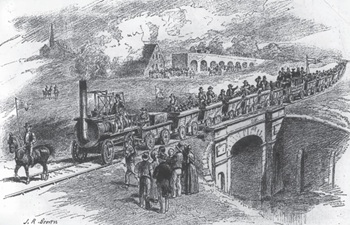
Heritage interests and operational requirements must be balanced.

Historic England publishes research into embodied carbon when retrofitting traditional buildings.

New Prime Minister delivers on ECA call for cut in electricity costs.

CIOB reacts to the announcement of Andy Burnham as Prime Minister.

Heritage and conservation science workforce survey - Have your say.

England's Suburbs 1820-2020. Book review.

New, more proportionate and targeted approach for higher-risk building assessments.

Government brings British Steel into public ownership.

UKCW Birmingham returns with bold new theme and focus.
New guidance published on competence requirements for self-certification schemes.
Construction Management, 8 July

NEETs crisis drives interest in trades, but apprenticeships barriers remain.
Passive fire protection webinar

MEP services penetration seals.