




Holy Austin rock houses

|
| Set in sandstone below Kinver Edge, the Holy Austin rock houses were inhabited until the 1960s. They have been restored and are owned by the National Trust. cc-by-sa/2.0 - © Graham Hogg - geograph.org.uk/p/5773126 |
[edit] Introduction
Also referred to as troglodyte dwellings, the Holy Austin rock houses are located in Kinver, England. Carved into the 250-million-year old sandstone cliff, these tiered cave homes were inhabited for more than 400 years.
Although the dwellings may go back to the early 17th century, the first recorded occupant was Joseph Heely, who lived in one of the rock houses in 1777. The softness of the sandstone made it easy to create new rooms. By 1860, 11 houses had been carved into Holy Austin to provide homes for 44 people.
There are other rock houses on Kinver Edge, including:
- Nanny's Rock (also known as 'Meg-o-Fox-Hole’) has five compartments but it is not known if it was ever converted into a house.
- Vale's Rock (also known as Crow's Rock) was converted into a house with several levels.
[edit] Rise and fall of the rock houses
In addition to the rock houses, a tearoom was established for visitors who wished to enjoy the countryside. The cafe operated until 1967, even after the occupants had moved away. Once the cafe closed, the homes fell into disrepair. Vandalism and nature combined to destroy the properties until the Natural Trust took over ownership in the 1990s.
Restoration work began in 1993, and one of the upper houses was restored as a family home based on photographs through the course of time. The original gardens were also found and restored.

|
| This photo the rock houses for troglodytes before their restoration. |
The second phase of restoration work began in 1996 on the lower level. This home had its own ‘ballroom’ according to photographic evidence and once belonged to a family that had been the subject of a painting by Alfred Rushton. Details in the painting were also used to help complete the project. The rock house is now decorated in the style of a Victorian home.
The rock houses are open to tourists.
[edit] Related articles on Designing Buildings Wiki
IHBC NewsBlog
IHBC sponsors Gardens Trust event 23-4 Sept 2026
.jpeg)
'Learning from the Past, Shaping the Future’ takes place in Milton Keynes
Renovations to Frank Lloyd Wright's Fallingwater complete
.jpg)
World Heritage Preserved project opens house for tours again
Shakespeare Birthplace Trust places Hall's Croft on HAR Register
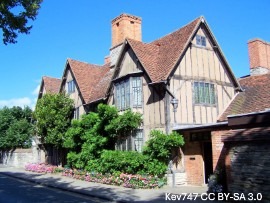
Stratford-upon-Avon home of Shakespeare's daughter is 'At Risk'
Lady Grange’s House repaired on St Kilda
.jpg)
National Trust for Scotland repairs stone cleit with link to famous island resident
Griff Rhys Jones on BBC Radio 4 Today programme
,_Green_Lane,_Derby.jpg)
The Victorian Society’s President unveiled its latest Top Ten Endangered Buildings 2026.
Need a MATE? Book your place now.
IHBC offers free webinars on applying for IHBC accreditation (Full & Associate).
UK Stained Glass Repository finds windows new homes
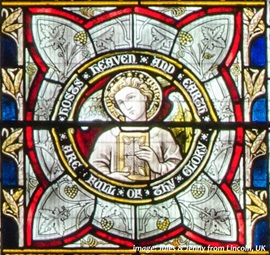
How are stained glass windows are rescued, stored and repurposed?
APPGEBE report sets high aims for quality
'Government must not sacrifice quality in drive to build 1.5m homes'
New measures protect Historic Shipwrecks from heritage crime

Underwater cultural heritage benefits from new HE guidance
How could the City of London skyline look in 6 years' time?

Visualisation shows approved planning applications as completed buildings
National Trust for Scotland calls for VAT cuts
Heritage neglect is encouraged by current policies
IHBC's 'Context' Issue 186 features Industrial Heritage
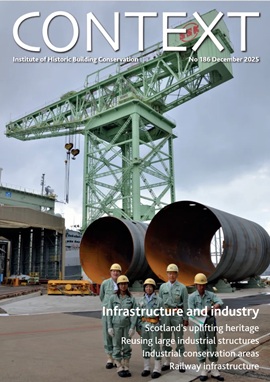
IHBC's members' journal reports on the challenges of conserving infrastructure
Book now for IHBC Annual School 2026
IHBC Annual School is taking place 18-20 June 2026 in Newcastle
RICHeS Research Infrastructure offers ‘Full Access Fund Call’
RICHeS offers a ‘Help’ webinar on 11 March
Latest IHBC Issue of Context features Roofing
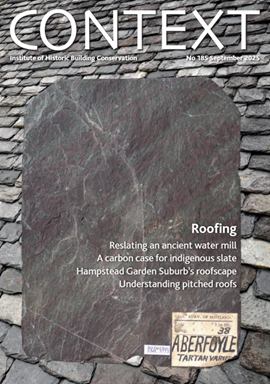
Articles range from slate to pitched roofs, and carbon impact to solar generation to roofscapes
Three reasons not to demolish Edinburgh’s Argyle House

Should 'Edinburgh's ugliest building' be saved?
IHBC’s 2025 Parliamentary Briefing...from Crafts in Crisis to Rubbish Retrofit
IHBC launches research-led ‘5 Commitments to Help Heritage Skills in Conservation’
How RDSAP 10.2 impacts EPC assessments in traditional buildings

Energy performance certificates (EPCs) tell us how energy efficient our buildings are, but the way these certificates are generated has changed.