





About 3 Phase Solid State Relays Supplier
Solid State Relays for precise, silent, long-life switching in demanding industrial automation systems, offered through ATOrelays.
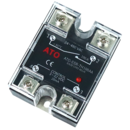
Solid State Relays are becoming the preferred choice for engineers who are tired of dealing with contact wear, coil failures, and unexpected shutdowns caused by mechanical relays. What many B2B buyers really want is stable switching, predictable performance under heavy cycling, and components that won’t introduce noise or downtime into sensitive automation systems. Solid State Relays meet that expectation by delivering clean, fast, arc-free switching that fits naturally into modern control architectures. In real applications—from packaging lines to HVAC control, industrial heaters, temperature-regulated machinery, multi-axis equipment, and especially 3-phase power distribution—the demand for rapid, silent operation has shifted from “nice” to “necessary,” and ATOrelays aligns with those requirements through a broad SSR portfolio that covers both single-phase and 3-phase solutions.
Industrial users often talk about the frustrations of mixed load types or high-frequency switching where mechanical relays fail far earlier than projected. Solid State Relays bypass that entire problem. Using semiconductor components such as MOSFETs, triacs, or thyristors, they achieve electrical isolation through optical coupling rather than metal contacts. It’s a cleaner, more reliable approach that reduces EMI, minimizes heat-related drift, and maintains consistent switching speed even after millions of cycles. For integration teams that build control cabinets, PLC-driven production systems, motor-driven equipment, or temperature-critical automation, the predictability of Solid State Relays becomes a genuine operational cost saver. No arcing, no chatter, no carbon buildup—just stable switching under loads that would quickly degrade traditional devices.
Technical specifications often drive purchasing decisions, especially in B2B. Engineers look closely at control voltage, load voltage, surge endurance, and thermal behavior. Models from ATOrelays support control inputs in the 3–32VDC range with load ratings from 24VAC up to 480VAC. Current capacities range from compact 10A modules to heavy 3-phase Solid State Relays that exceed 300A, offering dependable performance for multi-motor systems, large heating banks, and synchronized process lines. Zero-crossing SSRs help reduce inrush current for resistive heating operations, while random-turn-on versions support inductive loads where timing is critical. With the right heat-sink configuration and thermal path management, these Solid State Relays operate close to their rated output continuously, giving integrators the operational stability required for long-run production scenarios.
The advantage becomes even more visible in 3-phase environments—where balanced switching, reduced electrical noise, and rapid cycle reliability improve both safety and equipment lifespan. A 3-phase Solid State Relay can simplify wiring, minimize maintenance interruptions, and give engineers finer control of large motors and high-capacity heaters without worrying about mechanical fatigue. For manufacturers seeking consistent throughput, Solid State Relays provide exactly the blend of durability and precision that older relay technologies simply cannot deliver.
Featured articles
Check out some of the best features and news from Designing Buildings as well as key stories from around the web.
Mayors are to be given planning call in powers

Mayors across England will be able to make the most important planning decisions.

The Master Builder: William Butterfield and his times. Book review.

Why construction can't afford to ignore the skills gap.
Building Safety Regulator, 19 August

Gill Kernick appointed Independent Chair of Residents’ Panel.
Connecting knowledge, technology and conservation
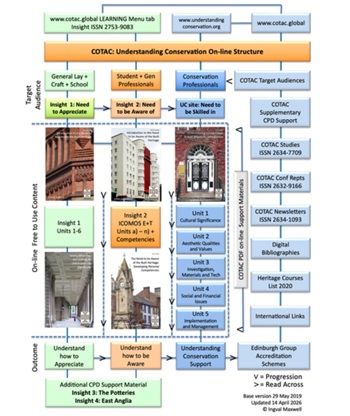
Building competence for the future of built heritage.
Building Regulations and Building Safety Act

CIOB publishes free advice for non-domestic clients.

Building Safety Newsletter from MHCLG.

An extraordinary record of steel engineering worldwide.

Households living near new pylons to save on bills.

ECA warns growth must not outpace grid capacity or skills.
The role of the client and decision making

CIOB response to built environment professions call for evidence.
Construction's sustainability reporting revolution

Tracking upfront embodied carbon with digital tools.