





Journal of Architectural Conservation Vol 30 Nos 2 and 3 July and November 2024
The Journal of Architectural Conservation (Vol 30, Nos 2–3, July–November 2024) has two papers of particular note. The first, by five joint authors from The School of Architecture, Tampere University, looks at climate-change mitigation potential in building conservation. It compares the carbon dioxide performance of four refurbishment alternatives to new construction, using a locally listed modernist 1950s school building in Finland. Four scenarios are examined, representing different approaches towards repair needs, cost implications, the time horizon of refurbishment and conserving the building’s architectural interest. These are compared with a similar contemporary new-build case study building completed in 2018.
The two differ by the materials of their structural frame: concrete or cross-laminated timber. The former is described as ‘business-as- usual’, while the latter represents a competing low-carbon technology. The study is based in Finland, with a cold continental climate, where operational energy consumption is significant for a building’s carbon footprint.
The second paper, by four joint authors at Durham University, looks at electrical resistivity tomography applied to the Grade I listed masonry Prebends Bridge (and scheduled ancient monument) in Durham. The purpose is to examine water ingress using non-invasive imaging methods to inform the proposed conservation of the structure. The methodology used is clearly explained and the paper sets out the basic principles behind the measurement technique. Previous use of electrical surveying for assessing historic masonry is also described. The paper concludes that geophysical electrical imaging has the potential to be a powerful tool in monitoring water-induced deterioration of heritage masonry bridges, informing intervention strategies and testing the effectiveness of the application.
This article originally appeared in the Institute of Historic Building Conservation’s (IHBC’s) Context 183, published in March 2025.
--Institute of Historic Building Conservation
Related articles on Designing Buildings Conservation.
IHBC NewsBlog
How could the City of London skyline look in 6 years' time?

Visualisation shows approved planning applications as completed buildings
National Trust for Scotland calls for VAT cuts
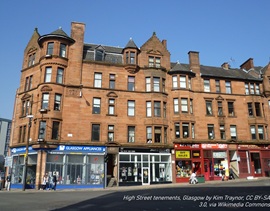
Heritage neglect is encouraged by current policies
IHBC's 'Context' Issue 186 features Industrial Heritage
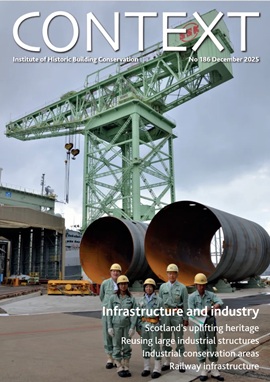
IHBC's members' journal reports on the challenges of conserving infrastructure.
Book now for IHBC Annual School 2026

IHBC Annual School is taking place 18-20 June 2026 in Newcastle.
RICHeS Research Infrastructure offers ‘Full Access Fund Call’

RICHeS offers a ‘Help’ webinar on 11 March
Latest IHBC Issue of Context features Roofing
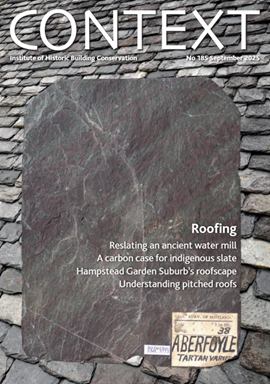
Articles range from slate to pitched roofs, and carbon impact to solar generation to roofscapes.
Three reasons not to demolish Edinburgh’s Argyle House

Should 'Edinburgh's ugliest building' be saved?
IHBC’s 2025 Parliamentary Briefing...from Crafts in Crisis to Rubbish Retrofit
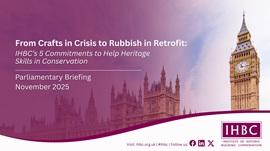
IHBC launches research-led ‘5 Commitments to Help Heritage Skills in Conservation’
How RDSAP 10.2 impacts EPC assessments in traditional buildings

Energy performance certificates (EPCs) tell us how energy efficient our buildings are, but the way these certificates are generated has changed.
700-year-old church tower suspended 45ft

The London church is part of a 'never seen before feat of engineering'.