- Construction management.
- Design and build.
- Design build finance and operate (PPP / PFI / DBO / BOOT).
- Emerging cost contracts.
- Engineering Procurement and Construction Contract (EPC) / Turnkey contract
- Engineering Procurement and Construction Management contract (EPCM)
- Furniture, Fixtures and Equipment contract (FF&E).
- Framework agreements.
- Management contract.
- Measured term contracts
- Measurement contract ('re-measurement' or ‘measure and value’ contract)
- Partnering.
- Prime cost contract / cost plus contract / cost reimbursable contract
- Prime contracting / prime-type contracting
- Traditional contract.
- Access to the construction site.
- Assignment, rights of third parties and collateral warranties.
- Commissioning.
- Contractor's design.
- Contract sum and adjustment,
- Date for possession, deferment of possession, progress, delays, completion date, suspension of works and termination.
- Dispute resolution procedures and alternative dispute resolution.
- Employer's instructions.
- Force majeure.
- Information release schedule.
- Insolvency.
- Injury, damage and insurance.
- Joint Fire Code.
- Liquidated damages.
- Net contribution clause.
- Partial possession.
- Payment, valuation (including off-site materials), certificates, fluctuations and retention.
- Practical completion.
- Project management and contract administration.
- Quality of works.
- Relevant events (compensation events), extensions of time and loss and expense.
- Sectional completion.
- Statutory obligations.
- Sub-contractors.
- Testing and defects (defects liability period)
- Variations, prime cost sums and provisional sums.
- Alternative dispute resolution.
- Articles of agreement.
- Common law.
- Condition.
- Construction contract.
- Construction law.
- Contract administrator.
- Contract negotiations.
- Contract strategy.
- Contractual right.
- Delay damages.
- Disallowed cost.
- Escalation.
- Essentials of a contract.
- Excepted risk.
- Extension of time.
- Form of tender.
- Hybrid construction contract.
- Key dates.
- Loss and expense.
- Modifying clauses in standard forms of contract.
- Named specialist work.
- Outturn cost.
- Payment for extra work.
- Pre-contract management.
- Proprietary information.
- Quantum meruit.
- Right to payment.
- Supply chain management.
- Variation.
- Z clauses.
- [http://www.fidic.org Fédération Internationale des Ingénieurs-Conseil].
- Institution of Civil Engineers: Conditions of contract.
- [http://www.jctcontracts.com Joint Contracts Tribunal].
- [http://www.neccontract.com New Engineering Contract].
- [http://www.legislation.gov.uk/ukpga/1977/50 Unfair Contract Terms Act].
- [http://www.legislation.gov.uk/ukpga/1987/43 Consumer Protection Act].
Product carbon footprint PCF
Product Carbon Footprint (PCF) is a Life Cycle Assessment (LCA) methodology that focusses on measuring, managing and communicating greenhouse gas (GHG) emissions that relate to a particular good or service.
The ISO standard that relates specifically to carbon LCA's is ISO 14067 which was first published in 2018 and aligns with LCA standards ISO 14040 and ISO 14044. In the UK, the British Standards Institute (BSI) developed PAS 2050 which was considered the first carbon footprint standard, introduced in 2008 and revised in 2011.
The GHG Protocol Product Standard is one of the final approaches to carbon footprinting but relates more to a public reporting standard, which aligns with PAS 2050. It was created by the World Resources Institute and the World Business Council For Sustainable Development as a way to report carbon at different levels allowing them to be aggregated for city, country and global carbon emissions reporting.
[edit] Related articles on Designing Buildings
- Carbon footprint.
- Embodied energy.
- Green Guide to Specification.
- Life cycle assessment.
- Material procurement.
- Product Category Rules
- Product Environmental Footprints (PEFs).
- Responsible sourcing of construction products.
- Sustainability.
- Sustainable development.
- Sustainable materials for construction.
- Whole life costs.
Featured articles and news
A case study and a warning to would-be developers
Creating four dwellings for people to come home to... after half a century of doing this job, why, oh why, is it so difficult?
Reform of the fire engineering profession
Fire Engineers Advisory Panel: Authoritative Statement, reactions and next steps.
Restoration and renewal of the Palace of Westminster
A complex project of cultural significance from full decant to EMI, opportunities and a potential a way forward.
Apprenticeships and the responsibility we share
Perspectives from the CIOB President as National Apprentice Week comes to a close.
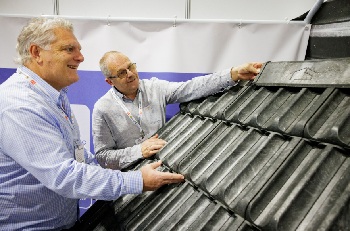
The first line of defence against rain, wind and snow.
Building Safety recap January, 2026
What we missed at the end of last year, and at the start of this...
National Apprenticeship Week 2026, 9-15 Feb
Shining a light on the positive impacts for businesses, their apprentices and the wider economy alike.
Applications and benefits of acoustic flooring
From commercial to retail.
From solid to sprung and ribbed to raised.
Strengthening industry collaboration in Hong Kong
Hong Kong Institute of Construction and The Chartered Institute of Building sign Memorandum of Understanding.
A detailed description from the experts at Cornish Lime.
IHBC planning for growth with corporate plan development
Grow with the Institute by volunteering and CP25 consultation.
Connecting ambition and action for designers and specifiers.
Electrical skills gap deepens as apprenticeship starts fall despite surging demand says ECA.
Built environment bodies deepen joint action on EDI
B.E.Inclusive initiative agree next phase of joint equity, diversity and inclusion (EDI) action plan.
Recognising culture as key to sustainable economic growth
Creative UK Provocation paper: Culture as Growth Infrastructure.
Futurebuild and UK Construction Week London Unite
Creating the UK’s Built Environment Super Event and over 25 other key partnerships.
Welsh and Scottish 2026 elections
Manifestos for the built environment for upcoming same May day elections.
Advancing BIM education with a competency framework
“We don’t need people who can just draw in 3D. We need people who can think in data.”


Comments
[edit] To make a comment about this article, click 'Add a comment' above. Separate your comments from any existing comments by inserting a horizontal line.