





About Efstathios Damtsas
 Student
 Improving Building Performance could be achieved by:
1) integrating responsive architecture and kinetics into our designs. This could include:
a) Compartmentalising spaces and 'packing away / storing / compacting' areas which are not needed throughout the day and unpacking / expanding them only when needed thus maintaining the internal environment of the enclosed space as it was when last used. Similarly, changing their usage of unnecessary areas throughout the day to give more useful spaces could also be the answer.
b) Dressing the building according to seasons by introducing Arduino systems and sensors thus increasing or reducing the required insulation of the areas accordingly.
c) Rotating rooms to maintain solar gains where required.
d) Introducing Artificial Photosynthesis to buildings located in sunny areas using Nanowire based designs and semiconductors to enhance absorption of light.
Power for all this but also for the running of the dwelling itself could be used by:
2) Renewable resources found locally by introducing wind turbines, solar panels and other means of collecting renewable energy on buildings
3) Human emissions (Thermal, Radiation, Carbon)
4) Recycling Human waste (food, excretions etc.) on site to produce energy for the dwelling
5) Introduce closed loop water systems for buildings to collect rainwater to use for sewage, irrigation and general rainwater harvesting but also for showers by biologically cleaning the water through microorganisms
6) Integrating Smart materials such as:
a) Crystal Clear Solar Cell windows to produce energy from the sun
b) Energy Producing Solar Paint
c) Energy Floors which induce energy through the user's steps (Sustainable floors)
d) Generating Energy by induction through revolving doors
e) For places with little sun and high wind induce energy through building envelope with electromagnetic induction of tile movement
f) Introduce Titanium Dioxide as a finish material to buildings which absorbs Smog.
g) Using sound resonation in walls to electromagnetically induce electricity.
Featured articles
Check out some of the best features and news from Designing Buildings as well as key stories from around the web.

Why construction can't afford to ignore the skills gap.
Building Safety Regulator, 19 August

Gill Kernick appointed Independent Chair of Residents’ Panel.
Connecting knowledge, technology and conservation
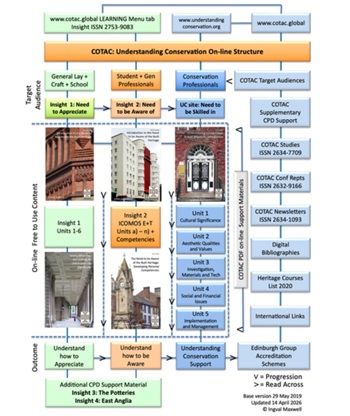
Building competence for the future of built heritage.
Building Regulations and Building Safety Act

CIOB publishes free advice for non-domestic clients.

Building Safety Newsletter from MHCLG.

An extraordinary record of steel engineering worldwide.

Households living near new pylons to save on bills.

ECA warns growth must not outpace grid capacity or skills.
The role of the client and decision making

CIOB response to built environment professions call for evidence.
Construction's sustainability reporting revolution
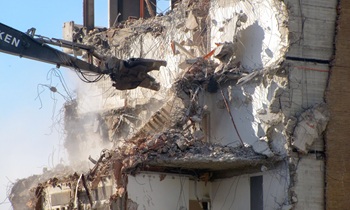
Tracking upfront embodied carbon with digital tools.
ECA welcomes procurement reforms

Public spending must back British jobs and skills.
Campaigning for Edinburgh: the Cockburn Association 1875-2049

The role of the civic voice in protecting character. Book review.