




Tomorrow's challenges in today's buildings winners
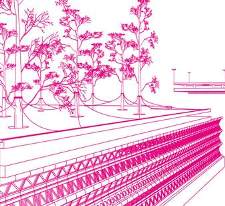
A radical proposal to create the ‘world’s first growing architecture’, involving tree-like buildings that absorb CO2, has won our BSRIA ideas competition.

On 4 October 2017, Designing Buildings Wiki and BSRIA launched an ideas competition - Tomorrow’s Challenges in Today’s Buildings - asking; how can buildings be designed today to ensure they are resilient to the changes they will face tomorrow?
Entrants proposed a wide range of solutions, including; bomb-proof construction, using ocean waste to make building materials, using rooftops for food production, electrifying the entire construction industry, and many, many more…
More than half the entries related to the challenges of energy, efficiency, climate change and climate resilience. Other popular subjects included demographics and changing lifestyles, resource scarcity, and specific threats such as earthquakes and terrorism.

|
The winning idea came from Bob Hendrikx, a Dutch architecture student, at the TU Delft. Bob is the founder of The Motown Movement, an urban initiative to fight climate change by making sustainable technology accessible to everyone. He was also named one of the top 100 young sustainable entrepreneurs in the Netherlands. |
|
His entry proposes the creation of self-sufficient homes by means of the ‘world’s first growing architecture’, a modular system of construction based around living trees that absorbs CO2 rather than emitting it, and generates renewable energy. Click here to see the full submission. Bob wins £500 worth of BSRIA membership, training or publications, and along with the runners-up, will be featured in BSRIA's Delta T magazine. |
The four runners-up (in no particular order) were:

|
Rami El Geneidy, a Master of Research student at the London-Loughborough Centre of Doctoral Training in Energy Demand. He proposed the use of smart energy efficiency contracts in the domestic market, providing heating and energy as a service, rather than buying gas or electricity per unit. This places the onus for performance on the supplier, incentivising them to invest in energy efficient properties. According to Rami: ‘The thing that drives me is finding how to ensure sustainability of our energy use in the long-term. In my multi-disciplinary and rigorous empirical research I wish to achieve this by being mindful of the interplay of technology, economics and people.’ |

|
Tomasz Sikorski, a UK-based project manager and recent MSc graduate in Building Services Engineering. His solution addressed increasing transportation problems and the emergence of drone technology, suggesting that buildings should be designed to allow airborne delivery and re-charging of vehicles. Tomasz says he is interested in intelligent buildings, BIM, sustainability, public security and modern architecture. He is currently writing a book about intelligent systems in facilities management. |

|
Aurora Barrett is studying real estate and planning at the University of Reading. She proposed that buildings should have an energy self-sufficiency capability for emergency situations such as power cuts or electromagnetic pulses (EMPs). She was inspired by documentaries focusing on people in the US making their own sustainable residential properties with EMPs in mind. According to Aurora: ‘I don't think it would be unfeasible for this to be manifested in commercial space as well, at the same time making buildings more eco-friendly by managing their own resources and controlling their energy output.’ |

|
Richard Tanner is a UK-based engineer for BAE Systems. He identified power management as his future challenge and suggested the entire network from appliances to buildings to car manufacturers and infrastructure providers should be integrated and responsive, and designed to be easily upgradable as new technologies become available or affordable. Richard is currently reading for a MSc in Systems Engineering Management at UCL. |
Congratulations to them all, and a big thank you to everyone who took part in the competition. The variety of and quality of ideas was excellent - it is great to know that so many people in the industry are thinking about the future.
BSRIA’s Information & Knowledge Manager, Steve Sansom, said; “BSRIA is pleased to have been involved in this competition and is delighted with the range, ingenuity and creativity of the entries submitted. Bob’s idea stood out as a genuinely realistic and stimulating way of using nature to generate renewable energy. BSRIA is always very keen to see more ideas fashioned that come under the low or zero carbon technology umbrella. It has been fascinating to see how innovative many of the competition entries were. Clearly, tomorrow’s challenges in today’s buildings is a subject close to the heart of many people."
Featured articles
Check out some of the best features and news from Designing Buildings as well as key stories from around the web.

The Building Safety Regulator announces a call for evidence.

Government approach could undermine delivery and regeneration.
World's first mass timber data centre.

The overlooked environmental aspect of data centre development.
Introduction to radon awareness

New technical information sheet published by CIOB.

Updated supplier guide can help electrical contractors engage with NHP.

CIAT confirm the winners of the 2026 architectural technology awards.

Government launches a one stop shop for flood preparedness.

Sir Edwin Lutyens: Britain's greatest architect? Book review.

CIOB publishes free template to help assess and manage risks.
ECA's reflections on Party Conference season

Burnham wants to be confident of winning before asking for a fresh mandate.
New Chief Construction and Scientific Adviser

Sergio Cavalaro, Professor of Infrastructure Systems at Loughborough University.
Building safety levy for England

CIAT publish estimator tool for members.