





2015 Government response to media reports about noise complaints
On 2 February 2015 the Government published a response to media reports about noise complaints following the announcement by Kris Hopkins MP on 11 January 2015, that the government was intervening to protect landlords and music promoters from crippling costs associated with soundproofing their venues.
Community Secretary Eric Pickles MP said “In recent years, too many town halls have been over-zealous in trying to silence church bells and village clocks which have chimed for decades, if not centuries. We need some common sense about such long-standing community uses… my department has now issued new, clear guidance to councils that the local character of a place should be taken into account during noise disputes”.
The new guide suggests that noise needs to be considered when new developments may create additional noise and when new developments would be sensitive to the prevailing acoustic environment. It also points out that neither the Noise Policy Statement for England nor the National Planning Policy Framework (which reflects the Noise Policy Statement) expects noise to be considered in isolation, separately from the economic, social and other environmental dimensions of proposed development.
Guidance is provided about:
- How to determine the noise impact.
- Observed effect levels.
- How to recognise when noise could be a concern.
- What factors influence whether noise could be a concern.
- Enforcement action against a statutory nuisance.
- How the adverse effects of noise can be mitigated.
- Further considerations relating to mitigating the impact of noise on residential developments.
- Whether local plans include noise standards.
- Whether noise concerns are relevant to neighbourhood planning.
- What factors are relevant to identifying areas of tranquillity.
The guide suggests that noise sensitive developments might adopt mitigation measures which could include avoiding noisy locations; designing the development to reduce the impact of noise from the local environment; including noise barriers; and, optimising the sound insulation provided by the building envelope.
Featured articles and news
Costs and insolvencies mount for SMEs, despite growth

Construction sector under insolvency and wage bill pressure in part linked to National Insurance, says report.
The place for vitrified clay pipes in modern infrastructure

Why vitrified clay pipes are reclaiming their role in built projects.

Research by construction PR consultancy LMC published.
Roles and responsibilities of domestic clients

ACA Safety in Construction guide for domestic clients.
Fire door compliance in UK commercial buildings

Architect and manufacturer gives their low down.
Plumbing and heating for sustainability in new properties

Technical Engineer runs through changes in regulations, innovations in materials, and product systems.
Awareness of the Carbon Border Adjustment Mechanism
What CBAM is and what to do about it.
The new towns and strategic environmental assessments

12 locations of the New Towns Taskforce reduced to 7 within the new towns draft programme and open consultation.

Buildings that changed the future of architecture. Book review.
The Sustainability Pathfinder© Handbook
Built environment agency launches free Pathfinder© tool to help businesses progress sustainability strategies.
Government outcome to the late payment consultation, ECA reacts.
IHBC 2025 Gus Astley Student Award winners
Work on the role of hewing in UK historic conservation a win for Jack Parker of Oxford Brookes University.
Future Homes Building Standards and plug-in solar
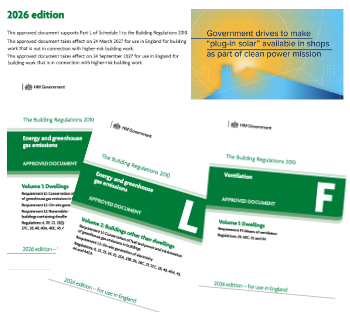
Parts F and L amendments, the availability of solar panels and industry responses.
How later living housing can help solve the housing crisis

Unlocking homes, unlocking lives.
Preparing safety case reports for HRBs under the BSA
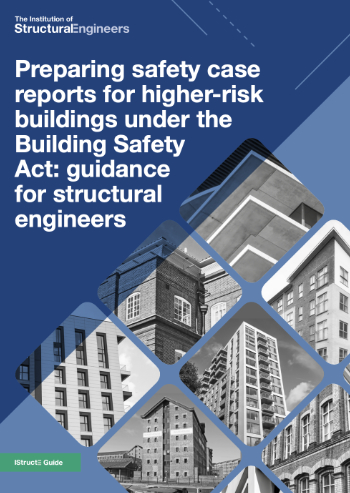
A new practical guide to preparing structural inputs for safety cases and safety case reports published by IStructE.
Male construction workers and prostate cancer

CIOB and Prostate Cancer UK encourage awareness of prostate cancer risks, and what to do about it.