





Standard Method of Measurement SMM7

Contents |
[edit] What is the Standard Method of Measurement?
It is important that there is a uniform basis for measuring building works in order to facilitate industry wide consistency and benchmarking, to encourage the adoption of best practice and to help avoid disputes.
The Standard Method of Measurement (SMM) is published by the Royal Institution of Chartered Surveyors (RICS). It was first published in 1922, superseding a Scottish Standard Method of Measurement which was published in 1915. It is now in its seventh edition (SMM7), which was first published in 1988 and revised in 1998.
[edit] What is SMM7
SMM7 provides detailed information, classification tables and rules for measuring building works. It is typically used in the preparation of bills of quantities, documents that provide measured quantities of the items of work identified by the drawings and specifications in tender documentation. Bills of quantities are issued to tenderers for them to prepare a price for carrying out works.
Work sections within SMM7 are classified according to the Common Arrangement of Work Sections (CAWS). CAWS creates a consistent arrangement of work sections for specifications and bills of quantities. It was first published in 1987 and was updated by the Construction Project Information Committee (CPIC) in 1998 to align it with the Unified Classification for the Construction Industry (Uniclass).
SMM7 is accompanied by the Code of Procedure for the Measurement of Building Works (the SMM7 Measurement Code). Whilst SMM7 can have a contractual status on a project (for example in the JCT Standard form of Building Contract), the Measurement Code is non-mandatory.
[edit] Replacement of SMM7 with NRM
SMM7 was been replaced by the New Rules of Measurement volume 2 (NRM2) which was published in April 2012 by the RICS Quantity Surveying and Construction Professional Group and became operative on 1 January 2013. SMM7 should not be adopted on projects after July 2013.
NRM2 is accompanied by two additional volumes:
- NRM1: Order of cost estimating and cost planning for capital building works.
- NRM3: Order of cost estimating and cost planning for building maintenance works.
It is suggested by the RICS that together, the new suite of documents will better reflect the way the industry now works:
- Better meeting the needs of clients.
- Providing for more up-front detail.
- Allowing better consideration of the full costs of a construction project (for example marketing costs, fees and charges, the cost of acquiring land, planning costs, relocation costs, the cost of finance, and so on).
- Providing a better method for quantifying risk.
The RICS also suggest that it will facilitate '...greater cross industry working (and) the introduction of Building Information Modelling' (ref. RICS).
NRM has moved away from the Common Arrangement of Work Sections (CAWS) to adopt its own system of indexing.
The New Rules of Measurement are accompanied by the 'Black Book', the QS and construction standards. Together they provide a suite of tools to help the construction industry work more collaboratively and consistently.
Contracts that refer to SMM7 should be revised when NRM is adopted on new projects.
For a detailed comparison of NRM2 and SMM7 see Comparison of SMM7 with NRM2.
[edit] Related articles on Designing Buildings
- Bills of quantities.
- Black book.
- Code of measuring practice.
- Common Arrangement of Work Sections.
- Comparison of SMM7 with NRM2.
- Cost consultant.
- New Rules of Measurement.
- RICS.
- RICS Property Measurement.
- RICS publishes Land Measurement for Planning and Development Purposes.
- Tender.
- Tender documentation.
- Tender pricing document.
- Uniclass.
[edit] External references
- RICS: RICS has released new guidance for quantity surveyors and other members working in the construction sector.
- RICS: NRM 1 and NRM 2 are available.
- NBS video: The New Rules of Measurement.
- RICS QS and construction standards (the Black Book).
- NBS: Coordinating Common Arrangment, Uniclass, NBS and Rules of Measurement.
Featured articles and news
Delayed, derailed and devalued

How the UK’s planning crisis is undermining British manufacturing.
How much does it cost to build a house?

A brief run down of key considerations from a London based practice.
The need for a National construction careers campaign

Highlighted by CIOB to cut unemployment, reduce skills gap and deliver on housing and infrastructure ambitions.
AI-Driven automation; reducing time, enhancing compliance

Sustainability; not just compliance but rethinking design, material selection, and the supply chains to support them.
Climate Resilience and Adaptation In the Built Environment
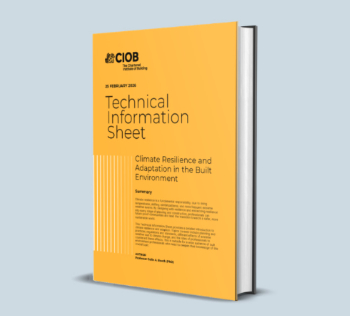
New CIOB Technical Information Sheet by Colin Booth, Professor of Smart and Sustainable Infrastructure.
Turning Enquiries into Profitable Construction Projects

Founder of Develop Coaching and author of Building Your Future; Greg Wilkes shares his insights.
IHBC Signpost: Poetry from concrete

Scotland’s fascinating historic concrete and brutalist architecture with the Engine Shed.

Demonstrating that apprenticeships work for business, people and Scotland’s economy.
Scottish parents prioritise construction and apprenticeships

CIOB data released for Scottish Apprenticeship Week shows construction as top potential career path.

From a Green to a White Paper and the proposal of a General Safety Requirement for construction products.
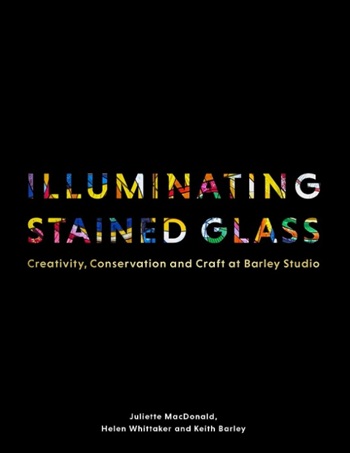
Creativity, conservation and craft at Barley Studio. Book review.
The challenge as PFI agreements come to an end

How construction deals with inherited assets built under long-term contracts.
Skills plan for engineering and building services
Comprehensive industry report highlights persistent skills challenges across the sector.
Choosing the right design team for a D&B Contract

An architect explains the nature and needs of working within this common procurement route.
Statement from the Interim Chief Construction Advisor

Thouria Istephan; Architect and inquiry panel member outlines ongoing work, priorities and next steps.
The 2025 draft NPPF in brief with indicative responses
Local verses National and suitable verses sustainable: Consultation open for just over one week.
Comments
[edit] To make a comment about this article, or to suggest changes, click 'Add a comment' above. Separate your comments from any existing comments by inserting a horizontal line.