





About The Institution of Engineering and Technology
The IET is one of the world’s largest engineering institutions with Over 167,000 members in 127 countries.

The Institution of Engineering and Technology (IET) is the largest multidisciplinary professional engineering institution in the world. The IET was formed in 2006 from two separate institutions: the Institution of Electrical Engineers (IEE), dating back to 1871, and the Institution of Incorporated Engineers (IIE) dating back to 1884. Its worldwide membership is currently in excess of 167,000. The IET's main offices are in Savoy Place in London, England and at the Michael Faraday House in Stevenage, England.
The IET has the authority to establish professional registration for the titles of Chartered Engineer, Incorporated Engineer, Engineering Technician, and ICT Technician, as a Licensed Member institution of the Engineering Council.
The IET is registered as a charity in England, Wales and in Scotland.
Featured articles
Check out some of the best features and news from Designing Buildings as well as key stories from around the web.
Building Safety Act implementation in Wales
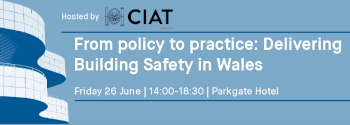
CIAT to host industry panel on 26 June.
New and updated CLC building safety guidance.
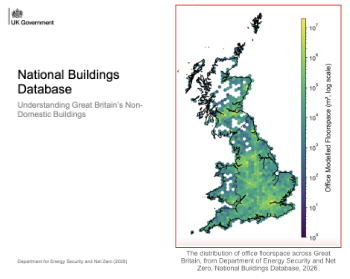
New UK National Buildings Database.
Building Safety Wiki Interviews

Chief executive of the British Woodworking Federation.
Planning condition discharge in England and Wales

A brief explanation from a building compliance expert, with further links.
Overheating guidance and tools for building designers

Guidance for dealing with element of building fabric control that have increasing importance.
Shading for housing, a design guide

From the Good Homes Alliance and British Blind and Shutter Association.
UK Standard Skills Classification (SSC)

A shared framework for describing skills needs.
Social media ban consultation comes to close

CIOB urges UK Government to consider social media’s role in careers guidance in ban debate.
The latest of eight Skills England apprenticeship units

The addition of battery manufacturing welcomed by ECA with a warning about the risks of fast-tracked apprenticeship units.
Building Control Independent Panel final report
A precis of a key report led by Dame Hackitt with full recommendations and link to the government response.