





Dayworks in construction
Daywork is a means by which a contractor is paid for specifically instructed work on the basis of the cost of labour, materials and plant plus a mark up for overheads and profit. It is generally used when work cannot be priced in the normal way.
NRM2, RICS new rules of measurement, Detailed measurement for building work defines daywork as; '... the method of valuing work on the basis of time spent by the contractor’s workpeople, the materials used and the plant employed.'
Examples of when daywork may be applied are when unforeseen obstructions are encountered during ground works or when work is instructed for which there are no comparative rates in a bill of quantities.
It is usual for most contracts to contain clauses that provide a method of evaluating variations, additional work and instructions by using existing contract rates and prices. NEC contracts favour pre-agreed sums based on acceptance of a contractor’s quotation.
There are two basic options as to how daywork rates can be priced:
Option A – a percentage addition
- Prime cost to which a percentage is added for overheads, profit and incidental costs.
Option B – all inclusive rates
- All inclusive rates are quoted at tender and incorporated in the contract documents. These include an allowance for overheads and profit, either fixed for the period of the contract, or, in the case of contract conditions that are index linked, subject to an inflation allowance.
[edit] Related articles on Designing Buildings
Featured articles
Check out some of the best features and news from Designing Buildings as well as key stories from around the web.

Accommodating the Victorian and Edwardian working woman. Book review.
Rethinking passive fire protection in design

PFP demands the same level of design rigour as structure or services.

38% of Gen Zs feel safe when a fire door is wedged open.
Stunning images from around the world

Shortlist for CIOB’s Art of Building photography competition.

Guidance for conversion of traditional pre-1919 stone buildings.
Industrial heritage in the Ruhr
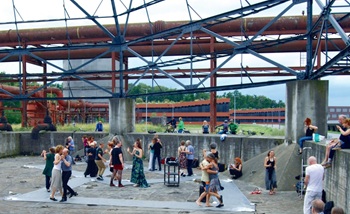
A marked difference to the fate of industrial landscapes in the UK.

Communities will be able to build their own clean energy.
Why diversity and inclusion matters for SMEs

CIOB’s D&I Charter shows how practical changes can support long-term growth.
Cut electricity bills to power growth

Coalition sends joint letter to the Chancellor.

Gasholders: a history in pictures. Book review.
Recognition, influence and growth

SocEnv identifies three strategic pillars in new strategy to 2045.
Discover the future of roofing, cladding and insulation.
Comments
There is a great mobile phone App that lets you quickly create a daywork or just a resource estimate and send it to the office in minutes, the App date stamps start and finish photos to help you prove the record is a true reflection of the works. It also allows you to quickly get pre-authorisation of the daywork prior to starting the works. Here's the link http://www.constructionrates.co.uk/Rate_Gen/Android_Mobile_Tablet_Smart_Phone_Daywork_App_UK_Construction_Industry.htm