





Construction contract certificates, notices and instructions
Contents |
[edit] Certificates
Many standard forms of construction contract require that certificates are issued by the contract administrator. Certificates generally result in payment being made by the client to the contractor. These certificates can either be issued regularly during the course of the works, such as interim certificates (normally issued monthly), or may signify that a particular stage has been achieved, such as practical completion. This can trigger other transitions, such as the commencement of a lease or access for a tenant to commence tenant works.
Typically, the certificates issued under a construction contract will include:
- Interim certificates.
- Certificate of practical completion (or section completion certificates where the works are to be completed in sections).
- Certificate of making good defects.
- Certificate of non-completion.
- Final certificate.
- There may also testing certificates for works and activities such as commissioning, electrical work, sprinkler systems, building regulations, concrete cube crushing, cladding mock ups and so on.
The Housing Grants, Construction and Regeneration Act 1996 (also known as the Construction Act) provides for the right to be paid in interim, periodic or stage payments, as well as the right to suspend (or part suspend) performance for non-payment and to claim costs and expenses incurred and extension of time resulting from the suspension. In addition, the Act requires that if the client intends to pay less than the amount certified they must issue a pay less notice setting out the basis for their calculation. Care must be taken to certify the correct amount, as over-certification followed by insolvency of the contractor may result in the client making a claim for negligent certification against the contract administrator.
Other specific certificates may be required (some from third parties) on completion of different aspects of the works:
- Fire regulation compliance.
- Electrical completion certificates.
- Test certificates both for manufacturing and installation.
- Lifting beams tests and marking.
- Building regulation compliance.
- Pressure vessel and boiler certificates.
Particular licenses and certificates may also be required for specialist projects, such as nuclear, pharmaceutical, oil, gas, and rail projects.
For more informtion see: Certificates.
[edit] Notices
Construction contracts also often include requirements for the parties to issue notices to each other under certain circumstances. This is often intended to provide a warning mechanism, enabling the parties to prepare for, or react to, particular situations. The contract should make clear the circumstances under which a notice is required, the form of the notice, the information it should contain, who it should be sent to, at what address and the notice period. Failure to follow the correct procedure can result in a subsequent claim being defeated.
Notices (or in some cases statements) might include:
- Default payment notice.
- Notification of failure to proceed regularly and diligently.
- Notice that there is a delay, or that there is likely to be a delay that could merit an extension of time.
- Notice of intention to refer a dispute to an adjudicator.
- Notice to proceed.
- Notification of an extension of time.
- Pay less notice.
- Payment notice.
- Statement of partial possession.
- Statement of retention.
- Suspension notice.
- Termination notice.
For more information see: Notices.
[edit] Instructions
Construction contracts will also generally give the contract administrator the power to issue instructions to the contractor. Broadly, instructions may be given:
- To vary the works.
- To postpone the works.
- To remedy workmanship, goods or materials which are not in accordance with the contract.
- To sanction a variation made by the contractor.
- In relation to the expenditure of provisional sums.
- To open up work for inspection.
- To carry out tests.
- To exclude persons from the site.
[edit] Related articles on Designing Buildings Wiki
- Architects instructions.
- Certificate of making good defects.
- Certificate of practical completion.
- Certificates in the construction industry.
- Confirmation of verbal instruction.
- Contractual right.
- Interim certificate.
- Final certificate.
- Off site materials.
- Payment notices.
- Permit.
- Sectional completion.
- The Construction Act.
- Termination.
- Variations.
Featured articles and news
Embedding AI tools into architectural education

Beyond the render: LMU share how student led research is shaping the future of visualisation workflows.
Why document control still fails UK construction projects
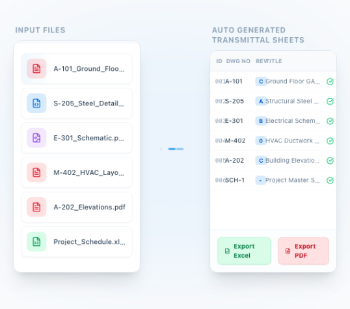
A Chartered Quantity Surveyor explains what needs to change and how.
New planning reforms and Warm Homes Bill

Take centre stage at UK Construction Week London.

A brief run down of changes intentions from April in an onwards.
Reslating an ancient water mill
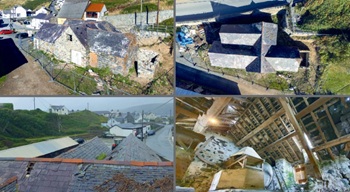
A rare opportunity to record, study and repair early vernacular roofs.
CIOB Apprentice of the Year 2025/26

Construction apprentice from Lincoln Mia Owen wins this years title.
Insulation solutions with less waste for a circular economy

Rob Firman, Technical and Specification Manager, Polyfoam XPS explains.
Recycled waste plastic in construction
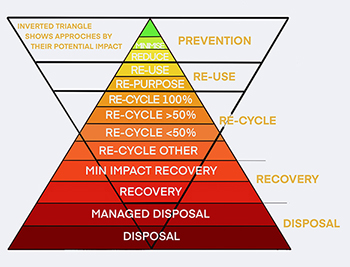
Hierarchy, prevention to disposal, plastic types and approaches.
UK Net Zero Carbon Buildings Standard V1 published

Free-to-access technical standard to enable robust proof of a decarbonising built environment.
Prostate Cancer Awareness Month

Why talking about prostate cancer matters in construction.
The Architectural Technology podcast: Where it's AT

Catch up for free, subscribe and share with your network.
The Association of Consultant Architects recap

A reintroduction and recap of ACA President; Patrick Inglis' Autumn update.
The Home Energy Model and its wrappers

From SAP to HEM, EPC for MEES and FHS assessment wrappers.
Future Homes Standard Essentials launched

Future Homes Hub launches new campaign to help sector prepare for the implementation of new building standards.
Building Safety recap February, 2026
Our regular run-down of key building safety related events of the month.
Planning reform: draft NPPF and industry responses.
Last chance to comment on proposed changes to the NPPF.

A Regency palace of colour and sensation. Book review.
Comments
To start a discussion about this article, click 'Add a comment' above and add your thoughts to this discussion page.