





Building Cost Information Service
BCIS is the Building Cost Information Service of the Royal Institution of Chartered Surveyors (RICS). It is described by RICS as ‘the leading provider of cost and price information to the construction industry and anyone else who needs comprehensive, accurate and independent data.’
It was established in 1961 to facilitate the preparation of elemental cost plans, where an 'element' is defined as, ‘a major physical part of a building that fulfils a specific function or functions, irrespective of its design, specification or construction’.
The BCIS website was launched in 1997.
Cost and price information is collected by BCIS from across the UK construction industry, then collated, analysed, modelled, interpreted and made available to the industry to facilitate accurate cost planning.
Information is made available online, by data licensing and through publications. It is broken down into five key areas:
- Construction.
- Maintenance.
- Rebuilding.
- Consultancy.
- Insurance.
BCIS information can be used by clients, consultants, quantity surveyors, contractors and suppliers to help:
- Preparing construction budgets.
- Benchmarking.
- Preparing cost plans.
- Preparing insurance quotes.
- Carrying out options appraisals.
- Value engineering.
- Preparing performance specifications.
- Procurement.
- Preparing maintenance budgets.
- Carrying out market research.
- Forecasting.
- Assessing price movements.
BCIS also offers consultancy and research support and publishes survey-based international cost information.
[edit] Find out more
[edit] Related articles on Designing Buildings Wiki
- BCIS elements.
- Benchmarking.
- Budget.
- Cost information.
- Cost planning.
- Elemental cost plan.
- International Construction Measurement Standards (ICMS).
- New Rules of Measurement.
- Quantity surveyor.
- RICS.
[edit] External references
Featured articles
Check out some of the best features and news from Designing Buildings as well as key stories from around the web.
Bridging the gap between clients and contractors

Concerns remain around contractor quality, capability, and delivery.
Construction Management, 10 June.

Heat pumps beat boilers in new home tests.
Building Safety Act implementation in Wales

CIAT to host industry panel on 26 June.

New and updated CLC building safety guidance.
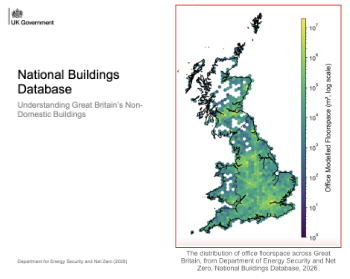
New UK National Buildings Database.
Building Safety Wiki Interviews

Chief executive of the British Woodworking Federation.
Planning condition discharge in England and Wales

A brief explanation from a building compliance expert, with further links.
Overheating guidance and tools for building designers

Guidance for dealing with element of building fabric control that have increasing importance.
Shading for housing, a design guide

From the Good Homes Alliance and British Blind and Shutter Association.
UK Standard Skills Classification (SSC)

A shared framework for describing skills needs.
Social media ban consultation comes to close

CIOB urges UK Government to consider social media’s role in careers guidance in ban debate.