





Energy related products regulations
The Eco-Design Directive establishes an EU-wide framework for setting minimum energy efficiency standards for energy related products. It aims to improve the energy efficiency of products throughout their life-cycle and includes provisions to enforce the use of EU energy labelling as well facilitating the free movement of goods across the EU.
The Directive has been transposed into law in the UK by the Eco-Design for Energy-Related Products Regulations 2010. The Regulations fall within the portfolio of The Department for the Environment, Food and Rural Affairs (Defra) and are enforced by the National Measurement Office (NMO).
It is anticipated that the roll out of the Regulations will result in energy savings for consumers and reductions in CO2 emissions as well as wider environmental benefits.
Energy related products include:
- Energy-using products (EUPs), which use, generate, transfer or measure energy, such as; boilers, computers, televisions, fridges, transformers, household lamps, industrial fans, industrial furnaces, etc.
- Other energy related products (ERPs) which, whilst they do not use energy directly themselves, do nonetheless have an impact on energy use, such as; windows, insulation, taps and shower heads, etc.
The Regulations require manufacturers, importers and suppliers to achieve minimum standards for the amount of energy regulated products consume. A declaration of conformity must be drawn up by the manufacturer or importer and the CE mark applied. Technical files must be drawn up by manufacturers or importers containing design calculations and test reports in support of the declaration of conformity. These files may be examined by the National Measurement Office.
The regulations currently cover:
- Air conditioners and comfort fans.
- Circulators.
- Dishwashers.
- Domestic lighting.
- External power supplies.
- Fans.
- Household refrigerating appliances.
- Motors.
- Simple set top boxes.
- Standby and off mode.
- Televisions.
- Tertiary lighting.
- Washing machines.
- Water pumps.
Related articles on Designing Buildings
- Climate change act.
- Climate Change Levy.
- Cradle-to-grave.
- CRC Energy Efficiency Scheme.
- Energy Act.
- Emission rates.
- Energy targets.
- Environmental policy.
- Green Claims Code.
- Green deal.
- Quality control.
- Standards.
- Sustainability.
- Sustainable materials.
- What to know about foundation earthing.
- Whole life costs.
- Zero carbon homes.
- Zero carbon non-domestic buildings.
External references
- National Measurement Office: Ecodesign for Energy Related Products.
- BIS: Energy Related Products leaflet.
- The Regulations in full.
- BIS: Summary of legislation in force.
- The Edge Debate: The Politics of Carbon Emissions Data.
Featured articles
Check out some of the best features and news from Designing Buildings as well as key stories from around the web.
New and updated CLC building safety guidance.
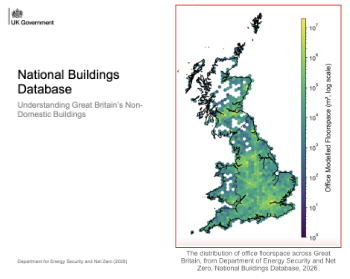
New UK National Buildings Database.
Building Safety Wiki Interviews

Chief executive of the British Woodworking Federation.
Planning condition discharge in England and Wales

A brief explanation from a building compliance expert, with further links.
Overheating guidance and tools for building designers

Guidance for dealing with element of building fabric control that have increasing importance.
Shading for housing, a design guide

From the Good Homes Alliance and British Blind and Shutter Association.
UK Standard Skills Classification (SSC)

A shared framework for describing skills needs.
Social media ban consultation comes to close

CIOB urges UK Government to consider social media’s role in careers guidance in ban debate.
The latest of eight Skills England apprenticeship units

The addition of battery manufacturing welcomed by ECA with a warning about the risks of fast-tracked apprenticeship units.
Building Control Independent Panel final report

A precis of a key report led by Dame Hackitt with full recommendations and link to the government response.
Building Safety recap April, 2026
A short and longer run-through of the month, with links to further information and sources.